
What should families know before choosing a nursing home or skilled nursing facility?
In this episode of The Care Cartography Podcast, host Andrei Tsygankov sits down with Brent Manuel Moss, a licensed nursing home administrator and nurse, to explore the realities of skilled nursing, rehabilitation, and long-term care.
Brent shares his experience managing a nursing facility, explains how short-term rehabilitation differs from long-term residential care, and discusses the financial and emotional challenges families encounter when navigating Medicare, Medicaid, and discharge planning.
Guest: Brent Manuel Moss, LPN, MPH — Licensed Nursing Home Administrator, Chestnut Ridge Nursing and Rehabilitation, Cumming, Georgia
Host: Andrei Tsygankov, CEO of AP Healthcare
This transcript has been lightly edited for readability.
Andrei Tsygankov: Welcome to The Care Cartography, a show about healthcare and having practical conversations with people who understand the healthcare system from different angles — from doctors and nurses to administrators and operators, to coordinators, patient advocates, and other healthcare professionals who see where the system works, where it breaks down, and what can be done better.
Today, we’re going to talk about a part of healthcare that nearly every family eventually encounters, but very few people truly understand until they’re in the middle of it: skilled nursing, rehabilitation, and long-term care. With us today is Brent Manuel Moss, a licensed nursing home administrator and operator of Chestnut Ridge Nursing and Rehabilitation in Cumming, Georgia, just north of Atlanta. Brent is a licensed practical nurse and has a master’s in public health from Morehouse School of Medicine. Brent, welcome. We’re happy to have you here.
Brent Manuel Moss: Thank you, thank you.
Andrei Tsygankov: You have a very unique perspective on healthcare because of your clinical experience, your facility leadership, your regulatory knowledge, and a broader public health view. I’d really like to talk about your path into healthcare, and also what families misunderstand the most about skilled nursing and long-term care.
Andrei Tsygankov: So let’s start with your path. How did you get here?
Brent Manuel Moss: I wanted to go to school for marine biology. My mother was encouraging me to go toward nursing. I have four aunts who are nurses, and they’ve worked in nursing for years — by now, somewhere around 30 or 40 years of nursing. So I was encouraged by them to go into nursing, and I did. I got into the nursing program and became a licensed practical nurse. From that point, I wanted to see more of what was out there. I met someone who told me to look into management, and I knew my path was going toward administration as a nursing home administrator. Eventually, I moved to Pennsylvania and got my license, and I actually just moved back down to Georgia.
Andrei Tsygankov: What do you do at Chestnut Ridge? How would you describe your role and your day to day?
Brent Manuel Moss: My role is managing the facility. I have about 17 department heads, from nursing to dietary, and a lot of families might have issues with different people in different departments. My job is to collaborate with everybody to make sure we can handle an issue. There are a lot of meetings. There are also a lot of times when we involve outside vendors, like hospice. And when we send people home from rehab, they get home health at home as well. So we’re working with multiple vendors to make sure residents get everything they need, both in the facility and outside the facility when they go home.
Andrei Tsygankov: And you’re in charge of orchestrating that entire endeavor.
Brent Manuel Moss: Yes, yes.
Andrei Tsygankov: That must be quite the day to day.
Brent Manuel Moss: Yeah, it’s a lot. A lot of families look to you to solve their problems. A lot of families want answers now, and sometimes you have to get other people involved to get them the answer they need. They’re looking at you like, “Hey, you’re the administrator, we want you to fix it.” And when the regulators — CMS, the state — come through the facility, they’re not looking for anybody except the administrator. Anything that happens in the facility is on me, because I have a license, and that license is on that facility.
Andrei Tsygankov: How many patients does Chestnut Ridge currently serve?
Brent Manuel Moss: We currently serve about 130, but we can have up to 150 patients in the facility.
Andrei Tsygankov: You’re on the administration side now. Do you think your experience on the nursing side has had an impact on how you lead the facility?
Brent Manuel Moss: Definitely. I can easily talk to the nurses and CNAs, and I can actually show them how to handle certain things. I also tell them to come to me. If there’s an issue where they’re not sure something should be done a certain way, they can go to the director of nursing, the assistant director of nursing, or other nurses in management — but I keep it open that they can come to me too. And I tell them that if they need help pulling patients up in the bed, cleaning patients, or getting patients into the Hoyer lift, I’m willing to help. They enjoy that. I can also educate them on basic things I’ve learned over my years as a nurse that they might not know, because we get a lot of new people into the field. I think they like being able to come to me without feeling like, “Oh my gosh, the administrator isn’t going to want to be bothered.” Being a nurse, I can relate to them and understand what they’re going through.
Andrei Tsygankov: You also have a master’s in public health. What drew you to the public health aspect?
Brent Manuel Moss: Sometimes you’ll talk to patients and realize they’re dealing with certain disease processes — like sarcoidosis or severe asthma — probably because they live in a bad area, next to a factory or near pollution. So I connect that to how we talk about healthcare and what patients deal with. I’ve always been interested in public health issues, and when I had the opportunity with Morehouse, I really took it. I wanted to learn more about public health, and I realized that a lot of those things — what patients dealt with, where they lived, the water they drank — correlate with how they are now in the nursing home. I just thought it was important, especially when I’m dealing with patients.
Andrei Tsygankov: Looking at your career to this point, do you see yourself more as a healthcare operator, a patient advocate, a systems person, or a combination?
Brent Manuel Moss: I would definitely say a combination of a healthcare operator and a patient advocate. Skilled nursing can be cutthroat sometimes, because you have insurance companies cutting people — especially if you’re with a for-profit company. You can’t just have someone in your facility who isn’t paying. So you have those issues. But you also want to make sure that when a patient is discharged home, they have a good system to go back to. Sadly, you learn that families aren’t together like that anymore. You see a lot of homelessness and poverty among the elderly. Someone has been in a nursing home, they can’t work, they can’t pay their bills — are they going to go back home to the lights being cut off?
Those are things I think about, and the social worker thinks about them as well. If I have to deal with my corporation, the owner of the company, to make sure a resident is safe, I’m going to do that. I also look at it from a regulatory standard: if I discharged somebody and it was not safe, how would they look at me as an administrator? I bring that up a lot in discussions about discharges. But I also understand that this is a for-profit company, so you have to bring it all together. If you don’t, you can lose your humanity as a healthcare operator — or you can forget how important the business is, because they have to make their money. You’ve got to think about both when you’re dealing with healthcare.
Andrei Tsygankov: It’s a very delicate dance — providing the patient care that’s necessary, giving patients what they need, treating them with dignity, while at the same time keeping the lights on and the doors open. Both of those are very relevant.
Andrei Tsygankov: You mentioned skilled nursing. What does that mean?
Brent Manuel Moss: I mean, nurses are already skilled. But skilled nursing normally refers to a nursing home setting, where you have nurses who are skilled to take care of certain things — PEG tubes, trachs, ventilators, drains, colostomies, urostomies. That’s the skilled part. Nurses have to hone those skills, and you’re making sure your nurses have the skills to take care of these people.
Andrei Tsygankov: So skilled nursing is really focused on the long-term aspect for a very specific population of patients. Would that be right?
Brent Manuel Moss: It’s focused on the long term, but it’s also focused on short-term patients. Residents come in because they broke a hip, broke a knee, or had a knee replacement, and the goal is probably to discharge them in two or three weeks. The nurses are using their skills to make sure they take care of those people appropriately. Then you have long-term residents who sometimes need equipment to be taken care of. You’ll get patients who don’t need much — maybe one medication — and then patients who take ten medications, need a lot of care, and need a lot more skills: a PEG tube, a colostomy. That’s when nurses are really using those skills. To me, all nurses are skilled, but especially in nursing homes and long-term care facilities — that’s what I think of as skilled nursing.
Andrei Tsygankov: When a lot of us think of nursing homes, we typically think of the elderly. I’m sure that’s a big part of the patient population, but are there other patient types who fit the mold of a nursing facility?
Brent Manuel Moss: Yes. Sadly, people are having strokes at a younger age, heart attacks at a younger age, kidney failure at an earlier age. So we do get people in their 40s, 50s, and 60s — not even at the Medicare age of 65 — coming to our building because they need long-term care or rehab.
I used to be an administrator at a ventilator facility, and sadly, we received a lot of younger people who’d had tragic accidents — injuries from car accidents, gunshot victims — who were on a ventilator and needed care because of their condition. So I have seen younger people in nursing homes. Most of the time it’s because of a sad, tragic accident. Sometimes it’s because of a disease process like ALS. We currently have people with ALS at our facility, and most of the time ALS starts in the late 30s or early 40s, so they’re still pretty young, and now they’re in a nursing home being taken care of. It depends on where you are, but the majority of our patients are probably in their 60s and 70s, and they’re there either long-term or short-term.
Andrei Tsygankov: For younger people who find themselves in a skilled nursing facility — especially those who come out of tragic events and were discharged from the hospital — do you see at least some of them eventually leave and go home?
Brent Manuel Moss: One big thing at my old facility in Pennsylvania was getting people off the ventilator. One year, we were able to get about eight people off the ventilator, and two young people were able to go home. That was pretty good, because when you’ve been able to walk and do your own thing, and now you’re stuck in a skilled nursing home on a ventilator, that messes with your mind — especially depression. So I have seen people transition. I’ve also seen younger people who’ve had strokes — maybe because they’re younger — do therapy, and now they’re not at a hundred percent, but they’re at eighty percent. They might still need a walker, but now they can speak. They had speech therapy, physical therapy, and occupational therapy, and now they’re able to go home and take care of themselves. I’ve seen that in my facilities and in other facilities I’ve helped out with.
Andrei Tsygankov: You mentioned rehabilitation and long-term care. What’s the difference between the two, or is there a common relationship between them?
Brent Manuel Moss: There’s a common relationship, and there’s also a difference. To me, long-term normally means people will be there for the rest of their lives. I think that’s the main reason CMS set up its guidelines and regulations — they want to make sure long-term residents are being taken care of properly. A lot is involved, from residents’ rights as patients to having a resident council so residents can advocate for themselves.
Then you have the skilled part. Those people are normally there for a little while, and the goal is to get them home or back with family. But sometimes long-term residents might need some rehab because they’re declining. That’s when the OT, the PT, and the speech therapist come in, evaluate them, and see whether they can make them better.
Andrei Tsygankov: Just so everyone is aware — OT, PT — what are those positions, and what do they do?
Brent Manuel Moss: Occupational therapists’ main job is to make sure you can do the things you would normally do on your own — the basic things we’re all used to doing, like eating, putting on clothes, personal hygiene. Occupational therapists are very important in skilled nursing and long-term care, because as people stay in a nursing home for a long time, they start losing some of those functions. Their job is to get people back to the point of, “Hey, can you put your clothes back on?” We do have nurses and CNAs to help with that, but it’s so much better if someone can do it on their own.
Andrei Tsygankov: Ideally, if someone has lost that function, you’d want to restore it. That’s in everyone’s best interest.
Brent Manuel Moss: Yes, everyone’s better for it, and that’s always a big push in skilled nursing. Physical therapists work with your arms as well, but mostly with your legs — helping people walk. That’s what people want: to be able to walk and do the things they can do. And then we bring in speech therapy for the ability to eat certain foods and to communicate properly. Sadly, strokes can change a lot in people, and that’s why you need speech therapy.
Andrei Tsygankov: You touched briefly on Medicare, Medicaid, and federal programs. What do families typically not understand when it comes to Medicaid, Medicare, or other federal benefit programs?
Brent Manuel Moss: I think a lot of people don’t realize how Medicaid works if you own property or assets and you want Medicaid to help pay for your stay as a long-term resident in a nursing home. They want your finances. People think, “Mom’s going into a nursing home, but we don’t want her to lose all her money, so we’ll take the money out of her account and give it to her children,” or, “We’ll put her house in her son’s name.” But there’s a five-year look-back, and Medicaid is going to look back and say, “No, we’re not going to approve Medicaid.” A lot of people don’t understand that.
Sadly, I have seen people whose loved one goes into a nursing home, they know it’s going to be long-term, we do the Medicaid eligibility verification, and they don’t get it because of everything that was done with the account. Medicaid is very strict. They want to know where the money went, who spent it, and what it was spent on. I remember a patient years ago who was just enjoying her money — going on shopping sprees. She didn’t know she would be in a nursing home a year later. When she came to our facility long-term, Medicaid wanted to know why that money was spent, and the family had to prove that she didn’t know she’d be going into a nursing home a year from that point. They did — but that’s how strict they are: “You spent five thousand here, two thousand here, ten thousand here.” She was just doing what she wanted to do, and she could do that. But Medicaid wanted to make sure it was done the right way.
People ask, “Why do they want all this information?” Well, it’s a government program that is paying for your loved one’s care, or your care. Especially if you have money or own property, they want to know everything. If you refuse to give that over, they’re going to deny Medicaid — and that creates a problem on my side, because now I don’t have a payer source for you unless you pay out of pocket. And normally, with Medicaid, you’re essentially paying toward your care until your funds are used up to a certain amount. It’s different in different states, but residents are allowed to keep a certain amount — sometimes around $70 — and everything else goes to Medicaid. If you had a house worth a million dollars and you sell it, most of that goes to Medicaid. If you’re married, it’s a different story: if you’re going into long-term care and your spouse is still living at home, they can’t sell the house. So I tell people: if your loved one wants to spend money and go on trips, that’s okay. But if you know that person is eventually going to go into a nursing home, think about how you’re handling their money, because if they see unusual transactions, they’re going to deny it, and that creates problems.
Andrei Tsygankov: So this is specific to Medicaid. If someone is looking to use Medicaid for those services, there’s a five-year look-back to see where the money went. If you have funds, you can’t hide them or give them to a family member knowing you’re going into a long-term facility, right?
Brent Manuel Moss: Yes, that’s correct.
Andrei Tsygankov: What about Medicare? Does Medicare pay for any of that?
Brent Manuel Moss: Medicare is a little different. You have Part A, Part B, Part C, and Part D. In skilled nursing, the main one we look at is Medicare Part A. Most people get Medicare when they’re over 65. Let’s say someone goes to the hospital because they broke an ankle, they have a three-day stay at the hospital, and now they’re going to a nursing home — we can use their Medicare days. That’s normally 100 days, and it only resets if you have a 60-day stretch outside a healthcare facility. Many people come in with Medicare Advantage plans, but if they’re on traditional Medicare, therapy dictates how that Medicare time is spent. Therapy works with the resident to see how many hours they can devote to getting the resident where they need to be before discharge.
Sadly, sometimes people can’t use all of those days because they’re not progressing, and you can’t justify using the Medicare days. That’s where the issue comes in: now we can’t use Medicare, so we have to go to Medicaid, or you have to pay out of pocket if you’re going to stay long-term. Medicare is one of the highest payers in healthcare, and most skilled nursing facilities look for Medicare residents because of those 100 days.
Andrei Tsygankov: But after 100 days, that’s it. Medicare will not cover someone long-term if they just need to stay there.
Brent Manuel Moss: No — that’s when you go to Medicaid. Part B helps with other things — PEG tubes, trachs, ventilators, colostomies — and sometimes therapy can provide some services under Part B for a Medicaid resident. But Part A is what most nursing homes are looking for. The thing is, if you’re on Part A and you’re not participating in therapy, therapy is going to have to discharge you from services, unless you have a skilled reason to be on Medicare — like a trach or a ventilator. Even then, you may not use all 100 days. After that, it’s back to Medicaid or paying out of pocket.
Andrei Tsygankov: Or if someone purchased a private long-term care insurance policy, right?
Brent Manuel Moss: Yes. I used to see those a lot. I don’t see them as much anymore.
Andrei Tsygankov: Why is that?
Brent Manuel Moss: I think those policies — especially the ones from the 80s and 90s — paid for pretty much everything, and they aren’t offered that way anymore. Now policies only pay for a certain number of days or a certain amount. Those older policies sounded great, but now those people are in their 70s and 80s and using them, and I think the insurance companies probably can’t afford it.
Andrei Tsygankov: So the economics just never made sense.
Brent Manuel Moss: I think they weren’t expecting Miss Johnson to live to 89 or 94. Now people are living longer than before — some into their hundreds — and they’re still in the nursing home, or in assisted living, and the insurance company has to keep paying. I think that’s a strain on these insurance companies. From what I’ve read, they’re much stricter about these policies now.
Andrei Tsygankov: So they’re becoming more rare, in your experience.
Brent Manuel Moss: Yes.
Andrei Tsygankov: What should families know or ask about when a family member enters a skilled nursing facility?
Brent Manuel Moss: I think the first thing is the facility’s quality measures. Families should look at the survey binder to see how the last surveys went. Surveys are how a skilled nursing facility stays open — CMS comes out and surveys the facility. During COVID, it went kind of crazy; some buildings weren’t surveyed for three or four years. Now they’re trying to get back on schedule and make sure every building is surveyed at least once a year. Then there are complaint surveys. A complaint could be about anything — people didn’t like the CNA from the night before, they didn’t like how they felt that morning, there was a smell because their roommate was changed. There are a lot of things people can be upset about.
So when families come in, they should look at the survey binder and the quality measures, which are normally available online. But also talk to the administrator. Talk to the director of nursing. Walk through the facility. We do tours all the time, and a lot of times people want to smell the facility. Does it smell like urine? Does it smell like feces in the halls? They want to see what the residents are doing.
Andrei Tsygankov: I’m sure that would be a bad sign.
Brent Manuel Moss: A lot of families have come to me and said, “It doesn’t smell like this other nursing home.” I can tell they’ve been to other places — and I’ve been to other places where it just smells like urine everywhere. It could be because the building is old and hasn’t been updated, but it could also be because patients aren’t being changed quickly enough. So when you go through a nursing home, see how people are interacting. Look at how quickly call lights are being answered while you’re touring. And talk to the people who are there every day — the administrator, the director of nursing — and see how they respond to you. If they’re rude, you’re probably not looking at a good facility. They’re probably rude to the patients as well.
I don’t think any nursing home is going to be perfect. As an administrator, I have probably a hundred-something employees I’m trying to make sure are doing the right thing. There’s a lot you can do to get everyone on the same page, but you’re always going to have a bad apple somewhere.
Brent Manuel Moss: I know people who look at the survey tags and say, “These don’t even make sense. I don’t know what this means.” A building can get tagged for not having an updated care plan. But if families see something like abuse — why did it happen? Was it about education, or something specific? — that’s what families need to pay attention to more.
Quality measures are how CMS grades healthcare facilities. They look at things like trachs, colostomies, and Foley catheters. We’re not putting people on Foley catheters just because we want to — there has to be a diagnosis and a reason.
Andrei Tsygankov: What does a Foley catheter do?
Brent Manuel Moss: A Foley catheter helps a patient urinate. There are multiple reasons for one. Sometimes, if a patient has wounds and can’t control their urine, the hospital will place a Foley catheter to keep urine from getting into the wound. Sometimes it’s based on the incident — say someone had a car accident and broke both legs; I’ve seen people get a Foley catheter in that situation. But when you go to a nursing home, the quality measures don’t match the hospital’s. The hospital was doing all of this, and now we have to ask what we’re doing. With IVs, Foley catheters, and other things, we have to make sure we’re following CMS guidelines. If a Foley catheter is in place without a justifiable diagnosis — and I believe there are only two qualifying diagnoses — the facility loses points on its quality measures.
There are also quality measures on staffing. CMS wants nursing homes to have more registered nurses. That’s hard, because a lot of registered nurses don’t want to work in nursing homes — hospitals are probably paying a lot more. But the number of registered nurses and your staffing ratios are part of your quality measures as well.
Andrei Tsygankov: So how do you attract good people, retain them, and keep morale up?
Brent Manuel Moss: We do an employee of the month — actually two employees each month. I encourage residents and staff to suggest who they want so we can pick. We also have a thank-you board where staff and families can thank other staff members, and whoever gets the most thank-yous gets a $50 gift card. We pick two people from that as well. I try to do a lot of things and events for the staff.
As a nurse, I’ve worked in nursing homes where events would come up and nothing was done — or the night shift wasn’t given anything. So if we have events, I want to make sure the night shift gets something too, and that everybody knows about it. We have a culture committee where we come up with ideas for the culture of the facility. I also hold town halls — I actually have one this Thursday — where I ask staff if they have questions or ideas, bring up issues I or others have noticed, and give them an opportunity to speak up about complaints or concerns. That’s how I work on retaining staff.
Another issue is pay. People are always looking at pay, so I work with the company to see if we can offer the pay people are looking for, because there’s a lot of competition out here. It depends on what the nursing assistants and nurses want. Some people want stability and are focused on a goal. Others jump from place to place looking for a higher dollar amount. I’ve had employees leave and later tell me, “I went to a place that paid two dollars more, but they had a bad culture.”
Andrei Tsygankov: So the things you mentioned help you retain people and keep morale up. Do you think that translates into a higher quality of care?
Brent Manuel Moss: Yes, I think it makes them feel more accountable: “They hired me, and I want to make sure I’m doing the right thing.” One big thing I do: when I walk into my building, I say hi to everybody — residents and staff — and I encourage all the department heads to do the same. You shouldn’t be at the point where staff say, “Oh, that lady who comes in — I don’t know who she is, she doesn’t say anything to me.” They should say, “That’s the business office manager. I might not remember her name, but she’s the one who always smiles.” I tell my team that families and residents should know who you are, and staff shouldn’t be afraid to come to you and say, “Hey, I’ve got an issue, can you help me?” If I can do it, you can do it.
Andrei Tsygankov: You mentioned that one of your goals is to make sure patients are treated with dignity and respect. What does that mean in an operational sense? How do you provide that day to day across so many patients and employees?
Brent Manuel Moss: When I talk to staff about respect and dignity toward residents, I don’t say, “Treat residents like your mom,” because some people don’t treat their own families right. I say: it’s almost like the golden rule. Treat them how you would want your loved ones to be treated. If that were your grandmother, your daughter, or you — how would you want to be treated? If someone is asking for something simple and the person refuses to do it, that’s not giving them respect.
Then there are simple things when you’re taking care of people: make sure the doors are closed and the curtains are drawn, and tell the patient what you’re doing — especially for those who are blind or hard of hearing. Give a smile, show them, “Okay, we’re going to the shower,” or find ways to communicate properly. If you tell patients what you’re doing, they feel a lot better. If you just grab them, get them ready, and take them to the shower room without explaining, that’s sometimes when you get complaints, because they feel like they were thrown into a situation.
Andrei Tsygankov: Taking the time to involve residents in what’s happening with them and to them — that’s a big part of it.
Brent Manuel Moss: Yes, yes.
Andrei Tsygankov: Why do you think treatment with dignity and respect is such a big issue in large healthcare systems?
Brent Manuel Moss: Sometimes people come into skilled nursing, or any healthcare organization, upset about a lot of things. Think about it: they’re in a nursing home now, and this may be where they’ll be for the rest of their lives. Sometimes they don’t have family who really cares. They’re thinking about all the things they used to be able to do and can’t do anymore — and now they have to deal with somebody with an attitude at the nursing home. Or at the hospital, you get attitude from the front desk, from security. I think that affects people’s attitude toward the whole healthcare world. They’d rather be home by themselves than be treated rudely.
I’ve gone to offices where no one talks to you, and when you go to the front, the person just hands you a form and says, “Fill it out” — no smile, not even “Hi, how are you?” Sadly, I think that’s how the world is. But I try to get my staff to understand dignity and respect and to come up with ways to handle situations. Even if a resident has an attitude with you or says something inappropriate, you can say, “Okay, I understand you’re not happy. I’ll get someone else who can help.” Sometimes it’s just you they don’t want to deal with. I don’t know why the healthcare world has gotten this reputation — I hear a lot of people say the nurses and CNAs aren’t nice, and it’s not just nursing homes, it’s hospitals too. I wish that could change in healthcare.
Andrei Tsygankov: You mentioned that managing regulatory compliance is a strong suit of yours. Do you think compliance and compassion are sometimes at odds with each other?
Brent Manuel Moss: Sometimes they can be. I can think of situations where a resident wants something that isn’t a major issue, but it doesn’t fit with being compliant — and I don’t just mean CMS regulations; it could be the facility’s rules or our policies.
I once had a resident with stage 4 cancer who was dying. He was on hospice, and on hospice he could eat anything he wanted — we already knew his diagnosis and care plan. But he only had one hand and needed one of us to help him eat, and that raised the issue: are we allowed to help him eat food that might harm him? I felt bad for the resident, but we couldn’t do that. In the end, they were able to get a family member to come in and help feed him. And shockingly, he still lived for a long time, even though he wasn’t supposed to eat regular food.
Andrei Tsygankov: Or maybe the regular food helped.
Brent Manuel Moss: I know it made him happier. That’s where compassion and compliance collide. This man has stage 4 cancer, his body is already debilitated, he’s not happy, he wants regular food, and we can’t give it to him. I understood and I had compassion for him. If he were at home, it would be a whole different story, but he was in a skilled nursing home. We could feed him puréed food, but not regular food, and he refused the purée: “I’m not eating it.” So now you’re worried, because this man isn’t eating. Hospice came up with an idea, and we all handled that situation together as a team.
Andrei Tsygankov: Speaking of compliance, what’s the connection between documentation and quality of care?
Brent Manuel Moss: Documentation proves everything you’re doing for a resident and shows what type of care you’re giving. I always tell the nurses and CNAs to document even the small things. If a resident wasn’t able to move their arms and now they’re reaching out to grab you and making an effort — let the nurse know, let the therapist know. It’s very important, because documentation is how facilities get paid. Insurance companies, Medicaid, and Medicare want to pay correctly, and if they see something documented incorrectly, they’re going to want their money back. That affects how the whole operation runs.
I’ve seen nursing homes and other healthcare facilities where the insurance company says, “We audited the charts, and you didn’t do this properly,” or, “You said this resident was getting this, and it didn’t happen.” I tell nurses and CNAs: if a resident is a two-person assist and you document them as a one-person assist every night you work, an auditor will say, “We paid you for a two-person assist on days the patient didn’t receive one. We want that money back.” In reality, that may or may not happen — but pay attention to how you document, because that’s how the facility gets paid when that information goes to the state and to insurance companies that want updates on how someone is doing.
Also, if nurses don’t document, the insurance company may look back and say, “Therapy says the patient is fine, and the nurses aren’t saying anything. Why is this being done for this person?” Then they’ll cut the patient’s coverage, saying the patient doesn’t need the services anymore — and it could simply be because the nurses didn’t document properly. So documentation is important to the whole operation.
Andrei Tsygankov: If you could give the audience one takeaway about skilled nursing facilities or skilled nursing in general, what would it be?
Brent Manuel Moss: Some people don’t realize it, because they may not have loved ones in a facility and might not think about it. But as people get older, a lot of them go into skilled nursing as patients. I think it’s going to affect everybody eventually. Not everybody can afford to keep mom or dad at home, especially if they have kids to take care of and their own things to deal with. People need to know how important this is, and we need to find ways to make sure these facilities are still around, because from what I’ve read, more nursing homes are closing than they used to, sadly.
Andrei Tsygankov: Are there resources available for people to educate themselves on skilled nursing and nursing home facilities?
Brent Manuel Moss: I actually don’t think there are many. Elder care law attorneys probably have some of the best information on skilled nursing and long-term care, but outside of that, there isn’t a lot of information out there, sadly. I think there should be. There may be advocates who help families navigate skilled nursing, but I haven’t found many. I’ve found more books about how to run and manage healthcare facilities than about how to navigate them as a family. That’s probably something somebody should pick up on.
Andrei Tsygankov: That sounds like an opportunity — a resource center or a book on that topic.
Andrei Tsygankov: I have one last question for you, and I think it might hit home given your background in public health. If you could change one thing about the healthcare system in America, what would it be?
Brent Manuel Moss: This is just me, but I think everybody should have access to healthcare. I know it’s not free, but we already spend millions on healthcare. Hospitals spend millions, especially on people who don’t have insurance. People who don’t get care may end up having a stroke or a heart attack — and then what happens? They go to a nursing home. If they’re not paying, somebody’s paying — CMS, Medicare, Medicaid — and it comes right back to us paying for it anyway. So how about a better system where people are encouraged to go to the doctor, instead of feeling afraid to go because they can’t afford a $300 bill for urgent care or a doctor’s office? If it’s already paid for, we’re not seeing all these people going into nursing homes or assisted living at a young age because of their comorbidities.
Andrei Tsygankov: So there might be a better allocation of resources — addressing problems on the front end rather than only dealing with them on the back end.
Brent Manuel Moss: Yes, I definitely think so, because we’re getting the problems on the back end. Not everybody, but we get patients who haven’t been to a doctor in years, who are in poverty or can’t afford to go, and the only time they saw a doctor was when they ended up in the hospital — and now they’re in a skilled nursing home. They may have paid into the system, but truthfully, we’re most likely all going to pay for that person’s nursing home stay together, depending on how long they live there.
Andrei Tsygankov: Thank you very much for being here today. I really appreciate your insight and expertise, and I really enjoyed having you.
Brent Manuel Moss: Thank you, I appreciate being here. I enjoyed it.
Andrei Tsygankov: Thank you very much for joining us. I hope you found this insightful and interesting. If you have comments or questions, please leave them in the comment section below, and we’ll share our contact information as well. Thank you very much.
This podcast is for educational and informational purposes only and does not constitute medical, legal, or financial advice. Medicare and Medicaid rules vary by state and change over time — please consult the appropriate agency or a qualified professional about your specific situation. AP Healthcare is a care coordination service and does not provide medical care.
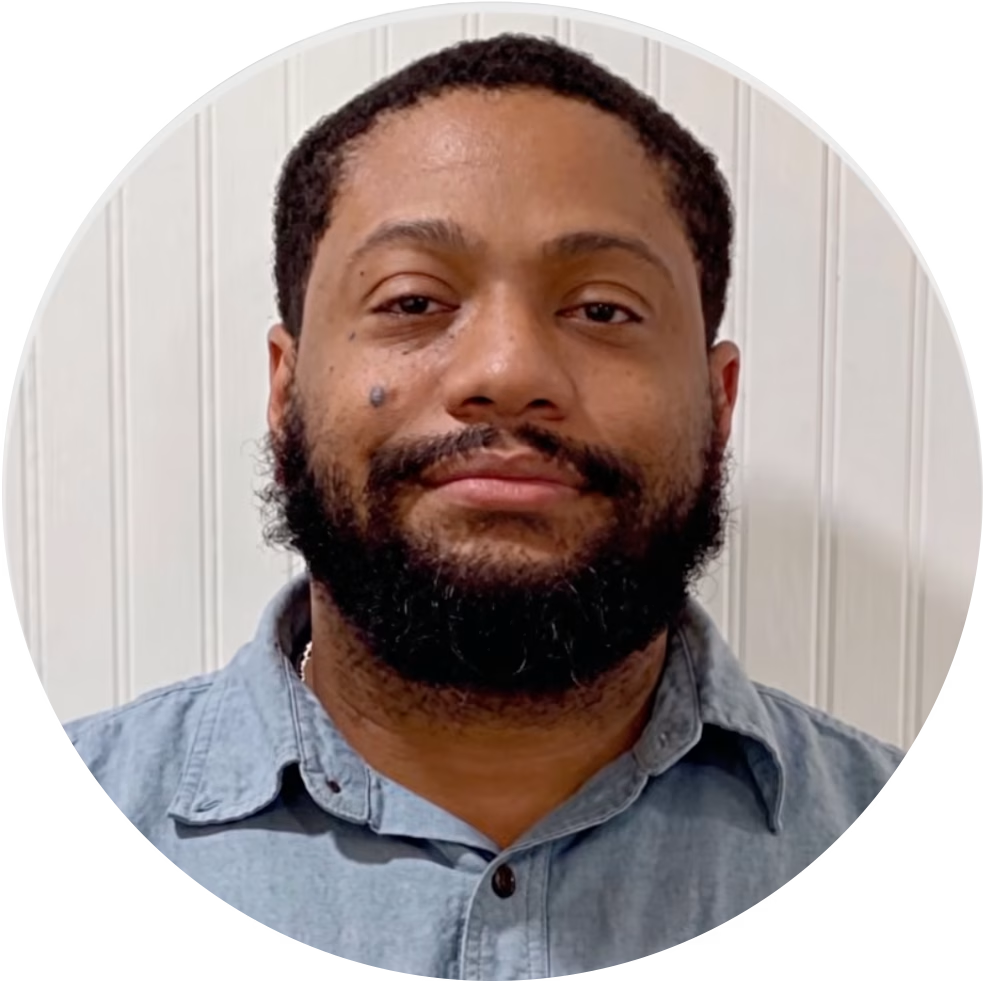
Brent Manuel Moss is a licensed nursing home administrator and licensed practical nurse with a Master of Public Health from Morehouse School of Medicine.
As the administrator of Chestnut Ridge Nursing and Rehabilitation in Cumming, Georgia, Brent oversees multidisciplinary teams responsible for skilled nursing, rehabilitation, long-term care, and resident services.
His background in nursing and healthcare administration gives him a unique perspective on the challenges families face when navigating care decisions. He is passionate about patient advocacy, staff development, regulatory compliance, and ensuring that residents are treated with dignity and compassion.