
In the first episode of The Care Cartography Podcast, host Andrei Tsygankov sits down with Dr. Deitrick Cox, a board-certified interventional physiatrist and Chief Medical Officer at Regenerative Ortho Center in Alpharetta, Georgia.
Together, they explore what patients need to understand about injury recovery, pain management, and regenerative medicine. Dr. Cox discusses the role of a physiatrist, the differences between surgical and non-surgical approaches, and common misconceptions about the recovery process.
The conversation also covers platelet-rich plasma (PRP) therapy, treatment expectations, and the importance of making informed healthcare decisions.
Guest: Dr. Deitrick Cox, MD — Board-Certified Interventional Physiatrist, Chief Medical Officer at Regenerative Orthopedic Center, Alpharetta, Georgia
Host: Andrei Tsygankov, CEO of AP Healthcare
This transcript has been lightly edited for readability.
Andrei Tsygankov: Welcome to The Care Cartography, a show about healthcare and having practical conversations with people who have an intimate understanding of the healthcare system from different angles — from doctors and nurses to coordinators, patient advocates, administrators, operators, and other people in the healthcare space who live it day to day and have an intimate understanding of what works well, what could be done better, and where things fall short. I’m your host, Andrei Tsygankov, and with me here today is Dr. Deitrick Cox, a board-certified interventional physiatrist and chief medical officer at Regenerative Orthopedic Center in Alpharetta, Georgia, just north of Atlanta. Dr. Cox, welcome, sir.
Dr. Deitrick Cox: Hey, glad to be here, Andrei.
Andrei Tsygankov: I’m genuinely excited to have this conversation with you, not only about what you do medically, but about how you think about patients — and specifically about the preservation and restoration of function from the orthopedic and neurologic perspective. I’m very excited to hear what you have to say.
Dr. Deitrick Cox: Absolutely. Glad to share.
Andrei Tsygankov: So, to start, can you tell us a little bit about yourself and the path that led you to a career in medicine?
Dr. Deitrick Cox: Yeah, I get that question quite a bit. One of the things I’ve always enjoyed was math and science, and for a long time I felt like engineering was going to be the course for me. Admittedly, I did not spend a lot of time exploring the different branches of engineering. But suffice it to say, the experiences I had showed me that I really wanted to be in an environment where the sciences and interaction with other people intersected. So healthcare seemed the right choice for me.
Between my sophomore and junior years, I did a summer internship at Meharry Medical College called the Health Careers Opportunity Program. It was like a mock medical school for the summer. I met other people who were interested in the sciences, and I had the opportunity to shadow — not an orthopedic physician, but an emergency medicine physician. That really solidified that this was the path I wanted to take. Having already completed half of the pre-med requirements, I made the decision then that I definitely wanted to be a physician.
Andrei Tsygankov: What do you do on a day-to-day basis? What does your profession really entail?
Dr. Deitrick Cox: Like I said, there were a couple of breadcrumbs along the trail. I had a wealth of experience here with a mentor in emergency medicine at Grady. I did some research at Emory, spent a visiting year at Emory as a junior, and did a lot of research at Grady and the CDC through emergency medicine.
When I got into medical school, the next breadcrumb on the trail was neurobiology. We got it in our curriculum around the second semester of medical school, and the professor was very, very engaging. Much of the first year of medical school tends to be rote memorization, but his course looked at neurology from the brain all the way to the muscle, and you had to actually make the diagnosis. It was the first course where you had to determine where a neurologic injury was based on the patient’s presentation — they’re weak here, they can’t sense there. That experience got me hooked on the neurologic system.
Physiatry came into play about a year later, when someone literally stumbled into our study room and asked the same question you just asked me: “Have you guys heard of physiatry?” I said, “No, what is that?” She asked what I was interested in. I said orthopedics, but also emergency medicine. And she said, “If you like orthopedics, and I see you studying neurobiology here, why don’t you look at physiatry?” After some time, I did — and at that point, I was hooked. I said, this is exactly what I like to do. There was just something about taking the patient through the injury phase all the way to the reintegration phase, into the real world. That really stuck with me. I wanted to be part of getting patients from injury or impairment all the way back to the real world.
Andrei Tsygankov: So it seems there’s a detective aspect to this, combined with patient interaction — and you may work with your patients for a longer period of time. Would that be fair to say?
Dr. Deitrick Cox: Absolutely. Particularly in the inpatient setting, you see patients who come in with brain injury, stroke, or amputation. How do we get this patient functional in the real world? What can we optimize within their own bodies? What aids or accommodations do we need to make as they return to the real world — whether it’s a crutch, a brace, an orthotic, or a prosthetic limb? What’s going to allow them to have a good quality of life and do everything they want to do, from day-to-day activities to getting back to work?
Andrei Tsygankov: Without identifying any individual patient, of course — what kind of patient interaction best describes your practice?
Dr. Deitrick Cox: This is a case that will always stick with me, because it happened toward the end of my internship in Boston, before I started my physiatry training at Emory. We had a young lady in the ICU. She couldn’t have been more than 13 or 14 years old. She came in very ill and ended up becoming septic — basically, an infection of the blood. She required ventilator support to breathe. It had affected her lungs. She had a high fever, and her white cell count was very high. A very, very heartbreaking situation to see anyone, let alone a child, dealing with this.
After she received appropriate therapy — antibiotics and intervention from our critical care team — she was taken off the ventilator. I was surprised to see that she even remembered me, my name, from before she went into the coma. But she was extremely weak. My teaching physician, the attending, said to me, “This is where your specialty is going to be so key, because what she has is a condition called critical illness neuropathy.” In short, it’s deconditioning, but it has reached a point where it affects the nervous system as well. He told me, “When you go off to residency and become a physiatrist, you’re going to be key.” I was able to work with her and the team, transitioning her from that high level of acute care into the rehabilitation system, working with the rehab specialists, and she got back to a normal life for a 13-year-old girl. That’s when I knew this is what I want to do.
Andrei Tsygankov: That’s a beautiful story, and I’m sure her parents were relieved. As a parent myself, I can only imagine what that situation would have been like. I’m sure they are eternally grateful to you and to your team.
Dr. Deitrick Cox: The whole team, absolutely.
Andrei Tsygankov: What is the overlap, or the interaction, between orthopedic surgeons and physiatrists — especially on the spine side?
Dr. Deitrick Cox: It’s not either-or. It’s both. They’re complementary. In pure orthopedics, if something is broken or displaced, or if there’s some type of neurovascular compromise, you’re going to need to see the orthopedic surgeon sooner. As it relates to the spine, there are red flags — progressive weakness, loss of sensation, loss of bowel or bladder function — where someone needs to see a spine physician sooner. Fractures of the spine and displacement of the vertebral bodies also need a surgeon.
But the majority of cases we see are non-surgical. Most surgeons will tell you that very few patients they see for consultation actually end up going the surgical route. That’s where those patients are seeing us, and we’re managing their care.
On the flip side, some patients would prefer to bypass physiatry and go straight to the surgeon — no qualm with that. However, a good spine surgeon who cares about results and outcomes will probably ask first: “How many non-surgical procedures have you had? How many injections have you had?” If the answer is none, the surgeons who care about results will say, “I don’t want to intervene until I know the simpler options have failed.” So they send the patient back to someone like me, a physiatrist, for conservative treatment — which a lot of times gives patients the outcomes they’re looking for.
Andrei Tsygankov: When a patient comes to you with pain, what are you trying to understand first?
Dr. Deitrick Cox: First, I’m trying to understand the source of the pain — the mechanism of injury, the history of the injury, how it occurred. Then I’m trying to understand how it affects them functionally. How is this affecting your quality of life, your activities of daily living, your ability to complete your job duties, your ability to do the things that are important to you — whether it’s golf, shopping, running, and so forth? Those are essential questions to answer on the front end, because they help us set the goal and the end point for our outcomes.
Andrei Tsygankov: When a person comes to you in pain, they want a quick fix — I think we all would. But there’s a timeline to recovery. What is that like, and how do you convey it to your patients?
Dr. Deitrick Cox: Setting the expectation is key — and number one, there are no quick fixes. We just discussed the complementary relationship between the physiatrist and the surgeon. There’s also a complementary relationship on the rehabilitation side. The full name of my specialty is physical medicine and rehabilitation. At our core, we are rehabilitation physicians, and we collaborate heavily with rehabilitation specialists — specifically physical therapists. I also collaborate closely with chiropractors and therapeutic exercise specialists — key people within the whole rehabilitation structure — and help coordinate and complement what they do.
Andrei Tsygankov: What do your patients commonly misunderstand about their diagnosis and their treatment?
Dr. Deitrick Cox: I would say the process as a whole is really where I try to drive home some understanding. For instance, patients may not understand why there isn’t a quick fix, or why they have to go see the therapist. And the least understood thing is their own role in the process.
Andrei Tsygankov: You have to be involved, right? Actually do the work.
Dr. Deitrick Cox: Correct, exactly — their portion. There are things I can do, and there are things therapists can do. But there are things you have to do as well. It starts with attending your rehabilitation sessions, and it continues with the home exercise program that the therapist and I have prescribed. I would say that’s probably the most misunderstood thing: it’s a team approach. It’s not “I’m here to fix you, and your role is a passive one.” It’s that we have to walk through this together.
Andrei Tsygankov: So the misconception is, “I come to see you, and you fix this.”
Dr. Deitrick Cox: Correct. No, no.
Andrei Tsygankov: It takes a village to get someone better and get them back to where they were before — or close to it.
Dr. Deitrick Cox: Absolutely. And on the diagnostic side, it’s really about education and teaching. That’s a key point: function. Where were you at baseline? How is this affecting the things you want to do? What’s still okay to do, and what may you need to take a break from or modify? So for the diagnostic piece the patient may misunderstand, it’s really about educating them that, hopefully for a very brief period, life is going to be different for them — but also reinforcing that there’s hope you can return to where you were once we’re done with the process, if you commit to it.
Andrei Tsygankov: One of your focuses is regenerative medicine. What does that mean to you, and how would you describe it to your patients?
Dr. Deitrick Cox: First, I make it clear that we already have a regenerative process in the body. The body has the ability to heal itself. When you’re injured, there’s cell injury, cell death, cell division, and so forth. But as we go through life, and the more we’re exposed to gravity here on Earth, the degenerative process tends to outpace the regenerative process for chronic injuries.
Regenerative medicine is simply fortifying the body, most often with natural elements — what we call orthobiologics — sometimes concentrating a certain portion of the patient’s own healing mechanisms and using that to bring about healing. So that’s how I would describe regenerative medicine: it’s really an augmentation of what’s already there. We just need to give it a boost.
Andrei Tsygankov: And how does that interface with more traditional techniques in modern medicine?
Dr. Deitrick Cox: When we say traditional, we’re looking at models that include medication and symptom management. Inflammation is part of both the regenerative and the traditional processes. In the traditional line of treatment, the goal is typically to remove inflammation, which is causing pain. If you’re beyond that point, it becomes a matter of masking or managing the pain with pain medicines — opioids and so forth. We want to treat it and find a resolution before it gets to that point.
Andrei Tsygankov: That absolutely makes sense. Sometimes when people hear “regenerative medicine,” what comes to mind is experimental, or not proven.
Dr. Deitrick Cox: Or anti-aging.
Andrei Tsygankov: Right — or turning back the clock. It seems to be written on every jar when you walk down the cosmetics aisle at the grocery store.
Dr. Deitrick Cox: Exactly.
Andrei Tsygankov: So how do you, in your practice, separate the therapies and treatments that are proven to work from the hype?
Dr. Deitrick Cox: The hype is typically some form of marketing — and there’s nothing wrong with marketing. We all want to market what we’re doing in any profession. But for us, it really starts with education. Our philosophy is to empower the patient by educating them and giving them resources. If you go to our website, regenorthocenter.com, we’re constantly building a library of references — NCBI, PubMed, the New England Journal of Medicine, and so on — so you can see the research for yourself and feel like you’re making an educated decision about whether these therapies are right for you. I would say that’s really what sets us apart: we show the research that’s there and available.
Andrei Tsygankov: So even on the regenerative side, you’re still relying on quality trials and science-based approaches.
Dr. Deitrick Cox: Absolutely. 100%.
Andrei Tsygankov: Can you tell us about one of those therapies and how it might benefit a patient?
Dr. Deitrick Cox: I would say the most common procedure that’s becoming more widespread among the general public is platelet-rich plasma — PRP for short. To contrast it with traditional medicine: we know that the number one cause of side effects and harm in patients is usually medications and medication interactions. I don’t disparage pharmacology — there’s certainly a role for it. But platelet-rich plasma comes from the patients themselves.
We extract it with a simple blood draw, the same as you would have for your annual labs. Then we isolate the healing factors from the patient’s own blood in a concentrated form and inject them directly into the areas that need treatment — injured, inflamed, or degenerative areas. It’s probably the most popular option for patients because it uses their own healing factors. There are some contraindications based on past medical history, but for the vast majority of people, we can take the healing factors that are supposed to respond to an injury, amplify them, and direct them into a specific injured area.
Andrei Tsygankov: What happens when you inject those platelets back into the patient’s body?
Dr. Deitrick Cox: Platelets are a key part of our repair system. Obviously, platelets are responsible for blood clotting, but they do a lot more than that. They’re a key part of our inflammatory system — and contrary to popular belief, inflammation plays a role in healing.
The way I explain it to patients is similar to a standard illness. Say there’s a bug — the flu, a bacterial infection. Your body mounts a fever response. No one wants a fever, but it’s used to expose and expel the pathogen. Similarly, we heal ourselves through the process of inflammation. As much as commercials and marketing talk about anti-inflammatories, inflammation does serve a role, particularly in the early period. Just like you don’t want a fever to last five days or a week, you don’t want inflammation to become chronic — that’s when the body can’t handle it on its own and it starts destroying the structures, and we need to step in with anti-inflammatory treatment. So, long story short, your platelets trigger an inflammatory response, which is part of natural healing, and over a period of about four to six weeks that can heal what’s injured in the musculoskeletal system.
Andrei Tsygankov: What does that experience look like for the patient? Is it a lengthy procedure?
Dr. Deitrick Cox: The procedure itself is fairly short. It’s like going to your general practitioner’s office for a blood draw — the same blood draw. We place that blood sample in a centrifuge, and depending on the volume, the area we’re focusing on, and the materials we’re pulling out of the plasma, it may take 15 to 20 minutes to prepare a good isolate of platelets. Then we inject those isolated platelets back into the body. So from the moment a patient says, “I want to do this,” to the time we’re done, it could be 30 to 45 minutes. Many times we also use image guidance — ultrasound or fluoroscopy — to get the platelets to their exact location.
Andrei Tsygankov: So knowing whether a patient is a good candidate, and where to put it, seems to be key.
Dr. Deitrick Cox: Absolutely. The diagnosis is key.
Dr. Deitrick Cox: I’ve seen PRP work for all ages, let me say that first. But what I’ve noticed in my practice is that younger patients typically notice results earlier than older patients with a more degenerative, chronic condition or injury.
The length of the inflammatory period matters too. We tell patients, “It’s going to get hot — it’s going to get worse before it gets better. Hang in there.” I’ve seen that period last as little as five days in my younger to middle-aged patients, in their 40s and 50s, and up to three or four weeks in my older patients. Once that inflammatory period cools off and subsides, that’s when patients notice results. Recently we did a hip injection for a labral tear in a young patient — a high-level collegiate soccer goalie — and within a week, he was noticing significant results.
Andrei Tsygankov: Wow.
Dr. Deitrick Cox: Not the answer everyone wants to hear, but it varies. Age, activity level, metabolism, your level of inflammation — all of that matters in terms of how long it takes to see results.
Andrei Tsygankov: Is it common for the same patient to receive PRP therapy in the same area more than once?
Dr. Deitrick Cox: It’s pretty common. What we know about PRP is that it works, and it works well, and we understand the mechanism. What we don’t have yet is standardization. It’s not like an antibiotic — 500 milligrams twice a day for 10 days. We don’t have that for PRP. So our philosophy is: if we see improvement, we’re heading in the right direction, and we like the results, then it makes sense to move on to a second one. We’re not in a position to say, “You need eight injections over the next 12 weeks.” That data is developing, but we’re not there yet.
Andrei Tsygankov: It’s not there yet.
Andrei Tsygankov: What about timing? Let’s say someone comes to you who didn’t get the care they needed earlier and has been in pain for a while. Does that have an impact?
Dr. Deitrick Cox: To the degree that chronic inflammation is probably leading to more joint destruction and osteophyte formation — which are just bone spurs; I’m trying to use layman’s terms as much as possible —
Andrei Tsygankov: Thank you for that.
Dr. Deitrick Cox: — as inflammation becomes less controlled and progresses, there’s a level of advancing injury and degeneration that comes along with it. But even so, for the right candidate, regenerative therapies, PRP included, can still be a viable option.
Andrei Tsygankov: What’s one thing you would want every patient to understand about pain and recovery?
Dr. Deitrick Cox: That’s a great question. The first thing I would tell patients is that understanding your pain typically helps, just from a psychological standpoint. Why are you in pain? We have to answer that first. I would also tell patients that we need to set realistic expectations and goals. Where were you before the injury? Were you having aches and pains in this area even before you came in? Was that your baseline? Understanding that is key.
I also want them to understand what a reasonable and acceptable level of pain is — particularly as we work with rehabilitation specialists, there may be some cost in the form of discomfort in order to get you out of discomfort, paradoxically. The idea of being completely, 100% pain-free — not that we can’t resolve the issue you’re dealing with, because we certainly can — but being 100% pain-free is not realistic even for a person with no injury at all. There are aches and pains that come with normal life.
Andrei Tsygankov: Can confirm.
Dr. Deitrick Cox: Exactly. I come home at night and my feet hurt. I don’t have any foot issues, but that’s why I need to recoup and get my rest.
Dr. Deitrick Cox: Have optimism and hope that the future is bright. We have come a long way with this treatment. I would say: stick to the science. Make sure you’re engaged in a multimodal program, and don’t believe that any one thing is a quick fix. It’s going to take a couple of professionals — maybe a surgeon, maybe a non-surgeon, definitely a rehabilitation specialist or chiropractor — and more than one thing to get you on track.
That’s the main thing I tell patients about regenerative medicine. All the time, we finish a procedure — say, a spine injection — and at the follow-up, the first thing they tell me is, “I feel great.” And I say, “Great. Now get back into therapy. Let’s strengthen this. Let’s go into what I call prehabilitation mode” — which is basically prevention. We want to build you up so we’re not running into this again. We want to fortify you against a recurrence of this injury.
Andrei Tsygankov: Dr. Cox, thank you very much for joining us today. It’s been a genuine pleasure speaking with you.
Dr. Deitrick Cox: Thank you. Appreciate it.
Andrei Tsygankov: Thank you very much for watching. If you have any questions, please reach out to us — our contact information is available below — and feel free to leave us a comment.
This podcast is for educational and informational purposes only and does not constitute medical or legal advice. Always consult a qualified healthcare provider about your specific situation. AP Healthcare is a care coordination service and does not provide medical care.
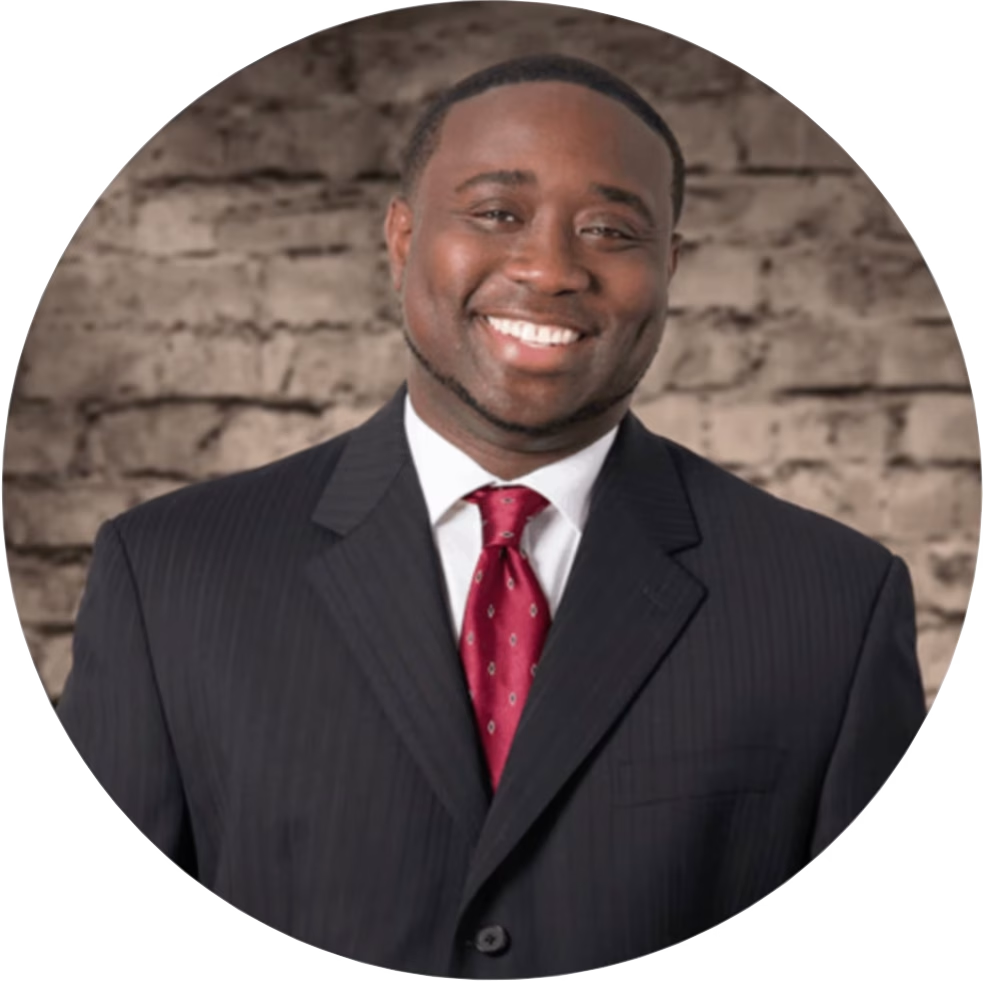
Dr. Deitrick Cox, MD, is a board-certified interventional physiatrist and Chief Medical Officer at Regenerative Ortho Center in Alpharetta, Georgia. He earned his medical degree from Morehouse School of Medicine, completed his internship at Harvard, and his residency at Emory University.
His work focuses on physical medicine, rehabilitation, pain management, and regenerative treatment approaches.