
What is naturopathic medicine, and how does it fit into a personalized approach to healthcare?
In Episode 3 of The Care Cartography Podcast, host Andrei Tsygankov welcomes a naturopathic doctor to discuss whole-person care, patient advocacy, lifestyle medicine, and the relationship between conventional and naturopathic approaches.
Drawing on her personal experience with epilepsy and her professional training, the guest explains why she believes understanding a patient’s history, daily habits, and individual concerns is essential to building a meaningful care plan.
Guest: Dr. Adelena Izold, N.D. — Licensed Naturopathic Doctor (Arizona); naturopathic consultant, educator, and patient care advocate, Whole Life Naturopathic
Host: Andrei Tsygankov, CEO of AP Healthcare
This transcript has been lightly edited for readability.
Andrei Tsygankov: Welcome to The Care Cartography, a show about healthcare and having practical conversations with people who understand the healthcare system from different angles — from doctors and nurses to administrators and operators, to coordinators, patient advocates, and other healthcare professionals who see where the system works, where it breaks down, and what can be done better.
Today, we’re going to talk about naturopathic medicine and its role in creating an individualized, integrated, holistic health plan. With us today is Dr. Adelena Izold, who is licensed as a naturopathic doctor in Arizona. Through Whole Life Naturopathic, she works as a naturopathic consultant, educator, and patient care advocate. Dr. Izold is affiliated with Full Circle Health in Oklahoma and ATL Pain Institute in Lawrenceville, Georgia, near Atlanta. Dr. Izold, welcome.
Dr. Adelena Izold: Thank you for having me. I’m very grateful to be here. Even hearing the words “naturopathic medicine” might sound a little different to some people, but I’m very excited to come here and share how beautiful my medicine is.
Andrei Tsygankov: That sounds fantastic, and we’d love to talk about that. Your personal history is also interesting, because you grew up in Italy — is that right?
Dr. Adelena Izold: Yes. I lived in Italy from when I was two until I went to high school. It was one of the best experiences, because we went to Italian schools, we learned the language, we were fully immersed, and we were able to come back to the United States for summers to see family. I definitely had a very fortunate childhood in that light.
That also shaped why I chose this discipline in medicine. In Italy, culturally speaking, there’s so much more community and folk medicine. People respect and value what they’re eating, what they do with their time, and who they surround themselves with. I really had a wake-up call when I moved back to the United States and got put back into the Western model and healthcare system. I thought, “Whoa, this is completely different from what I was exposed to and raised on.” So growing up in Italy definitely shaped why I chose this path.
Andrei Tsygankov: And you also had your own personal health journey that made your career path self-evident — during your teen years, is that right?
Dr. Adelena Izold: Definitely. I think so many of us go through our own health challenges at various times in our lives. Because I had mine at such a young age, I’m actually really grateful for it now, because it gave me an idea and an opportunity.
I went through my own health challenge and got put into the system. I went to different neurologists and different doctors, and nobody could figure out why. Nobody could give us answers. It felt like, “Just take this medicine, that’s all there is.” And I kept asking, “Is there anything else we can do?” There wasn’t a lot of time and there wasn’t a lot of guidance. Through that journey, when I said I wanted to be a nurse, everyone said, “You can’t be a nurse — you can’t be told what to do. You need to look into naturopathic medicine.”
I still get a little teary-eyed when I think about it, because when I came across naturopathic medicine and started reading and learning about it, I thought, “Why isn’t everyone doing this? This is how medicine should be.” You take the time with the patient, you’re treating the whole patient, and you’re really trying to fortify their own body through natural practices. It made so much sense to me that the same day I looked into it, I applied, and I got accepted to the Southwest College of Naturopathic Medicine in Tempe, Arizona.
Dr. Adelena Izold: I’m originally from upstate New York. I completed my four-year undergraduate degree in Buffalo, where I played collegiate lacrosse — one of my favorite times of my life. Then I moved to Tempe, Arizona, for my four-year graduate degree, which was amazing because of the amount of clinical training you receive. I did rounds in oncology, addiction, geriatrics — you name it. We get the same level of clinical training, and then we also have to learn all the natural approaches.
As a naturopathic doctor in the state of Arizona, I’m licensed as a primary care physician — licensure across the United States is very different from state to state. I’m trained to prescribe and to refer for things like surgery, but as a naturopath, I try to use more natural options. I’m trained in chiropractic, acupuncture, homeopathy, herbs, nutrition, and functional medicine. That’s what I focus on a lot here in Georgia, because many patients are looking for answers outside of their regular doctors — whether it’s food sensitivities, gut testing, or hormones. We’re really trying to figure out why you’re having so many of these issues, as opposed to only managing the symptoms.
Andrei Tsygankov: If you were to describe naturopathic medicine, how would you do it?
Dr. Adelena Izold: Naturopathic medicine is ultimately about using natural approaches first — always looking at the least invasive practices before more invasive ones. Prescriptions and surgeries are more invasive; they change the trajectory of your body. Naturopathic medicine itself is root-cause medicine. We’re trying to figure out the why, and then hopefully create a domino effect toward healing by aligning with what the body is asking for or needs support with. That’s where functional medicine can better guide us.
But realistically, naturopathic medicine is a lifestyle. It’s the way you eat, the way you value your time, your sleep, and your recovery. The years after the pandemic really highlighted the need and the demand for this style of care. We were so used to the Western model, and now people are learning more and want to advocate for themselves. It’s interesting: back in 2014, when I chose this path, people thought it was weird. Now you can’t go anywhere without hearing about functional or natural approaches to health.
Andrei Tsygankov: It seems your own health journey took you down this path. Can you elaborate on what happened to you and how the naturopathic approach helped?
Dr. Adelena Izold: Of course. When I was 16, I was diagnosed with epilepsy, which is a very debilitating condition — even more so for my family members, because there was no reason. All of a sudden, I had a grand mal seizure, and they couldn’t figure out why. I spent most of high school going to neurologists, sleep studies, and different tests, and everything came back normal.
Throughout those years of trying to figure out the epilepsy, nobody ever talked to me about what I was eating or how I was sleeping. With a teenager especially, those are conversations you want to have: Are you staying out all night? Are you drinking water during the day? In my opinion, those things should have been mentioned. My dad works in the medical field, and he said, “We should look into the ketogenic diet.” So we started advocating and learning more, and in that process, I was eventually able to come off my medication and learn much more about my body and what I need. Sleep became my superpower.
I did brain mapping, which is a different strategy that isn’t done very often. A standard EEG looks at brain activity, but brain mapping looks at the specific brain waves and what’s happening in there. We also looked at hormones like cortisol and stress. Then I met a naturopath who showed me that there’s so much more you can do for your health than just staying on a medication.
Here was a motivated young person trying to seek answers, and the first line of conversation wasn’t, “Here’s what I think you should be eating.” It was more like, “You’re doing all you can, just take the medicine.” I didn’t feel supported, and I had to advocate for myself at 16. I really want to put that out there for the many patients who don’t get to see what natural medicine has to offer. Today there’s much more accessibility. Natural medicine is on the rise — people want supplements, peptides, all these strategies — but they don’t have guidance from someone trained in using these tools for them as an individual. They dabble, it doesn’t work, and they’re left with a bad taste in their mouth about natural medicine, without ever having given it a fair try.
Andrei Tsygankov: Given that perspective, what do you think is the biggest difference between naturopathic medicine and traditional Western primary care?
Dr. Adelena Izold: First and foremost, it’s the algorithm that so many primary care physicians are working within: “When I see a high TSH, I order a comprehensive thyroid panel or refer to an endocrinologist.” Honestly, that Western algorithm is the easiest part of my job — and I don’t mean to discredit any providers; there are great doctors out there. The natural side is the extra layer: How is this person eating? How can we activate this within their own body? The hard part is figuring out which botanical or which specific mineral someone needs — the thing that creates the domino effect of healing, the biggest bang for our buck, where the body starts moving in sync with the effort to heal.
So the difference, I’d say, is the cookie-cutter approach in so much of primary care, without diving in deeper. That’s where patients sometimes get frustrated. Even my friends and family ask, “Why would you move to Georgia? It’s an unlicensed state for naturopaths. You don’t have the same scope of practice — you can’t prescribe, you can’t legally diagnose.” And I say I’m looking for patients who want to dive deeper, learn more about their health, and are eager to change their diet and their habits — and I want to be the person who advocates for them in using natural strategies.
Andrei Tsygankov: As part of your care, it seems your initial patient evaluation is quite lengthy. Why is that time with the person important, and what are you looking for?
Dr. Adelena Izold: I offer a free 30-minute consultation to any prospective client. My friends ask, “Why do you do that? You should be charging for your time.” But realistically, I want to make sure we’re a good fit. If I’m going to be your naturopath — someone guiding you through your health — I want to be sure we connect, that the relationship is reciprocal, and that the way I explain things makes sense to you. It’s a partnership, a relationship.
In that consultation, I learn about their health concerns: What’s been going on? When did you last have labs? What are you taking? Then I can gauge which tools in my toolkit would be of service — whether that’s functional testing or something else. After the consultation, we may order additional labs — a stool test, a genetic assessment — and once I get the report back, we meet for the initial 90-minute visit.
In that visit, we go all the way back to birth. What was your mom’s pregnancy like? Were you born vaginally or by C-section? Were you breastfed? What were your vaccinations? What was growing up like? What did you eat during those life phases? We break it down by decades — what was puberty like? I’m trying to learn everything that may have led to the concern or symptom you’re experiencing now, along with a typical day in your life: How are you eating? How is your digestion? How are you sleeping? What are you taking? We put that together, review the labs, and come up with a plan.
So much of what we do is working with the body’s own efforts. There are phases and approaches to supporting a patient. A lot of things are trending and easily accessible right now, and patients need to understand that natural medicine takes time. But if it’s done in the right order — the hierarchy the body is actually experiencing — you’ll have the best experience with natural medicine.
Andrei Tsygankov: What does root-cause medicine mean to you?
Dr. Adelena Izold: Root cause is realistically figuring out the why, and it can be so many things. In the naturopathic realm, we talk about “obstacles to cure.” Maybe it’s someone’s job, maybe it’s a relationship — stress. I can’t make stress go away, but I can help make your body a bit more resilient to stress.
The root cause varies for everybody. Some factors are “nature” — things happening in your genetics, which can take a long-term strategy to mitigate, whether that’s inflammation, methylation, or detoxification that your body struggles with. Then there’s what I call “nurture”: How are you eating? How are you sleeping? You have to sort through both to find the root cause. For some people it’s gut health; for others it’s something else. It’s about taking the deep dive, connecting, talking with someone, and learning where their concern is primarily stemming from.
Andrei Tsygankov: What role does a person’s motivation to learn more about their body play in all of this?
Dr. Adelena Izold: That’s honestly the most exciting part. Sometimes we get patients who say, “My mom told me I have to come,” so they’re not as keen on exploring this option. But typically, their skepticism fades once we take the time to explain things and they have what I call “aha moments” — they start making connections. We read through the labs, and sometimes I see things they haven’t even told me, and they ask, “How do you know that?” Well, we’re reading between the lines.
Andrei Tsygankov: Labs don’t lie, right?
Dr. Adelena Izold: They don’t. And that’s how we can expand on the root cause for so many people.
Andrei Tsygankov: What would make someone a good candidate for naturopathic medicine?
Dr. Adelena Izold: I think anyone is a candidate. But most commonly, I see patients who have tried it all, and I’m maybe their last resort. Maybe they’ve been supported by their endocrinologist for years to manage thyroid concerns, but they never dove deeper to learn how the thyroid, the sex hormones, and the adrenals work together — and where the gut fits into all of this. So I’m often looking for motivated individuals who are eager to take that deeper dive and learn more about their health.
There has to be a sweet spot, and that’s what I look for in the consultation: is this the right fit for you? As pretty and nice as naturopathic medicine sounds from the outside, it does require a lot of work, and it requires the right practitioner. That goes for any style of practice — massage therapy, chiropractic, acupuncture. There’s a lot of exchange happening, and you need to connect with your practitioner.
Andrei Tsygankov: And what would make someone — I won’t say a bad candidate — but a less optimal candidate?
Dr. Adelena Izold: Everyone really is a candidate, but it takes openness and willingness — being open to suggestions and recommendations.
Andrei Tsygankov: Your website mentions learning about the patient and their issues in their own words. Why is that important in what you do?
Dr. Adelena Izold: That’s a very good question, because realistically, that’s how we put the puzzle pieces together. You listen to how someone says something. Maybe they’re talking about their childhood, the stress, the trauma — and expanding on those areas helps us hone in on where their body may be struggling to overcome or heal. So taking the time to really learn about someone matters. It’s beautiful how a specific herb or remedy can be very telling of someone’s demeanor and the way they express things. That’s part of the beauty of naturopathic medicine.
Andrei Tsygankov: What are some examples of how certain symptoms in the body may connect?
Dr. Adelena Izold: There are several scenarios. One is digestive health and function, which often gets overlooked. Any naturopath will always ask about your bowel movements, because a large share of your immune system lives in the gut, and your hormones and neurotransmitters are all processed at the digestive level. If you’re not learning about someone’s digestive health, you’re missing a key piece.
Often you’ll see someone who’s depressed and has brain fog, and they’re prescribed medications, which may be helpful to get them stable. But in terms of root cause, we want to know what’s happening at the digestive level. I’ve asked a patient, “How often do you have a bowel movement?” and they said, “Once every two weeks — that’s normal for me.” And I said, “What do you mean, that’s normal for you?” Food goes in, food goes out; the body should be able to process and eliminate waste. That patient was in their 30s, and nobody had ever talked to them about how regular they were.
So it’s about looking at a symptom and diving much deeper. Depression is often framed as a chemical imbalance — and that’s fine; maybe you’re on medication and stable now. But it’s important to ask why there’s an imbalance. Are we not methylating, not clearing, not detoxing? Is it digestive? Is it hormonal or neuroendocrine — maybe thyroid-related? I work a lot with GI health and hormonal balance, including many women in perimenopause and menopause who don’t realize that the thyroid, the sex hormones, and the adrenals are all connected, with the gut in the middle pulling a lot of the strings.
Often, people go to their gynecologist for hormones, their endocrinologist for the thyroid, and their primary care doctor for cholesterol, and nobody is looking at everything together and asking how it all works in a typical day: “How are you eating?” “Oh, I skip all these meals.” It’s about taking the time to understand why the labs look the way they do and what we can shift.
Andrei Tsygankov: Speaking of labs, let’s talk about functional testing. For those who might not be familiar, what does it mean?
Dr. Adelena Izold: Functional testing is very patient-centered, because you’re trying to determine which tests are most appropriate for that patient. It’s a big field — I could talk all day about it. Functional genomics, for example, is a beautiful assessment that looks at your gene SNPs and your body’s predispositions. But functional testing really means having access to different types of labs, diving a bit deeper, and reading between the lines.
What’s often misunderstood is that even with basic labs from a regular practitioner, you can learn so much about a patient without expensive add-ons. At the same time, that’s often where I need to go further, because many of the patients I work with have already had all the basics done and need a deeper dive into more functional testing to learn about their bodies.
Andrei Tsygankov: In the testing scenario, how do you avoid over-testing or overwhelming a patient with data?
Dr. Adelena Izold: That’s super important. I believe there’s a hierarchy. There are many integrative clinics now, and some push a lot of assessments — and, similar to imaging, if you go looking for problems, you’re going to find them. It’s important to learn about the patient and where their body will benefit most from which assessment.
It might be best to start with a comprehensive blood panel to look at inflammation, vitamins, and hormones — a snapshot in time of what’s happening in your body. From that view, if we see a lot of immune activation or allergy cells, maybe the best path to relief is to look at digestive health. If we see a lot of hormone disruption, maybe we need deeper hormonal profiles — DUTCH testing, saliva, urine, you name it. We have access to all of those, but we don’t want to overdo it. You don’t want to order every test and start every supplement.
I always make it clear to patients that I’m not a “functional doctor.” There are many functional practitioners now — MDs, nurse practitioners, chiropractors — and I appreciate all of them. But many are still trained in “a pill for your ill,” and instead of a medication, they may give you a supplement, which can be great. At the end of the day, though, people are left with supplements, hoping they’ll feel better, and nobody is educating them about their body, reading through the labs, making connections, and explaining where they are now and what we’re shifting toward.
For example, today I had a patient where we looked at genetics and a big comprehensive blood profile, and we talked through what I’d expect to see in a couple of weeks and which values we’ll reassess. So many people navigating the natural path need more steps and guidance — what should I expect, what should I notice? Not everyone gets that, especially when they’re using TikTok or Google to guide their natural strategies.
This information is accessible now — functional medicine and natural approaches aren’t foreign anymore, and I’m grateful for that. The difference is whether this is someone’s discipline and passion. I’m a naturopath, so the way I view and approach the body is different: I’m trying to find the root and support your body’s efforts. A lot of the Western strategy looks at it as “your body is doing something wrong.” In naturopathic medicine, we want to fortify your body’s efforts and validate what it’s experiencing. That’s why objective markers from functional testing help patients understand their bodies: you don’t feel your cholesterol being high or your vitamin D being low, but having a tangible number helps guide your efforts and keeps you accountable.
Andrei Tsygankov: You mentioned you’re not looking to keep someone on a program for too long, but natural medicine still takes time. Why is that?
Dr. Adelena Izold: First, protocols have to be appropriate for what’s happening in your life. As a practitioner, your practice is always a reflection of your own life — I can deeply empathize with a working mom with young kids, for example. It takes learning what’s going on with your patients and what phase of life they’re in, and coming up with a plan that’s specific to them in this season. Life happens, and that can derail so many people. I can’t make things go away for you, but I can help you through it.
That’s another way naturopathic medicine is different: you’re not calling a nurse line — you’re working with me, and I’m holding your hand quite a bit in the beginning, which I love doing. Because then patients learn, and soon enough they know what they need to be eating, what their trigger foods are, and what they need to monitor, because someone explained it and taught them. So later in life, when I’m not there looking over their vitamin list, they know what they should be taking.
Andrei Tsygankov: Do you have a story about a patient that really exemplifies the success of natural medicine?
Dr. Adelena Izold: Yes — someone who is now a dear friend of mine. When he came to me, he was six years into his health journey and very sick. He got sick on his honeymoon, of all times, and his GI issues eventually led to the removal of his entire colon, which is a very big deal. He was expected to live on prescriptions for the rest of his life — medications for pain, medications to manage his bowels, all these different things.
His physical therapist referred him to me and said, “I don’t know what you’ll be able to do — he’s a great person, but…” And I said, “Okay, bring him in.” The big difference with him was his willingness. You could see it in his eyes: “I’m going to figure this out.” He was motivated and open. But you could also tell he’d been burned by previous practitioners. If something didn’t work as hoped, he was almost sad or scared to tell me. And I’d say, “That’s fine. That one didn’t work — let’s switch to this one.” That was a different dynamic for him. He’d never had someone, instead of treating it as his problem, go back into their toolkit and find another option.
He had worked with numerous GI doctors, but nobody had ever run a functional stool test to see what was actually happening. Through that, we were able to change his gut ecology. When I met him, he was spending hours on the bathroom floor, unable to move. His life couldn’t function — his marriage, his child.
Andrei Tsygankov: That’s terrible.
Dr. Adelena Izold: I’ll never forget calling his GI doctor: “We got his results back, and there’s a specific prescription the results suggest could be beneficial — would you be open to it?” He said, “Yeah, I’ll order it, but good luck.” That was the exchange between practitioners about this patient’s care, which obviously didn’t sit well with me.
But through our efforts, he has regained weight. When I first met him, the only things he could eat were milk and donuts — he was living on milk and donuts and still losing weight. Now he eats a variety of colorful fruits and vegetables and he’s putting on weight. You would never guess. He actually started his own nonprofit, which I’m part of, called Healing Seekers. It’s for people going through health struggles, creating space to know that there’s opportunity and growth in the healing journey. A lot of times we get down — “Why me? This is taking so long” — so it’s about creating space for anyone who’s struggling to share their story, their successes and setbacks, and to find more hope.
Andrei Tsygankov: That’s a fantastic story.
Andrei Tsygankov: In your view, what should conventional medicine and naturopathic medicine learn from each other?
Dr. Adelena Izold: Good question. There’s real value in the more reactive style of medicine — there’s a different layer of care you get there, especially in emergency medicine. I remember my emergency medicine rounds and classes; in those situations, that’s exactly the kind of care you want. I’ll do everything in my power not to end up there, which is why I love preventive, naturopathic strategies.
I really think we need to bridge the two and lean on each other’s strengths. Instead of judging each other and saying one is better or worse, let’s bridge, let’s integrate, let’s work together — we’re on the same team. If more practitioners were open to conversations and thought processes from both sides, that’s how we grow. That’s why I chose medicine: every day you learn something new. To any young people out there — if you want a field where you never stop learning, this is the field for you. And when you work with practitioners who are set in their ways and not open to strategies like functional medicine, you have to wonder why they chose this field. Really, all it takes is learning and trying.
Andrei Tsygankov: What is one misconception about naturopathic medicine you’d like to correct?
Dr. Adelena Izold: I want to make one clear distinction, because it often gets confused. There are traditional naturopaths, who are trained in many of the same principles taught in naturopathic medical school, and there are naturopathic doctors who went to an accredited naturopathic medical school. I also completed a two-year residency after my graduate program. So there are different tiers within naturopathic medicine.
At the end of the day, it’s really about the practitioner and what they’re able to provide. Traditional naturopathy is beautiful and foundational, but many of those programs can be completed online, and the challenge is that some individuals may give naturopathic medicine as a whole a bad reputation — just like with medical doctors, there are good ones and bad ones. That distinction isn’t widely discussed, and it matters more now that naturopathic medicine is on the rise.
Andrei Tsygankov: What advice would you give someone who wants to be healthier but doesn’t know where to start?
Dr. Adelena Izold: Start with an internal evaluation. What are you doing day to day to improve your health? How are you sleeping? How are you eating? Ask yourself those questions. Sometimes I’m the one prompting those thoughts, because we get so busy in life — or we assume, “My dad had this issue, so I’m going to have it too.”
If you’re just trying to be healthier, introspection is a good place to start. Look inward and gauge where your fears about your health might be. Are you worried you’ll have a heart attack like your dad? It starts with introspection — listening to yourself — and going from there.
Andrei Tsygankov: That’s great advice. Along the same lines, what’s one thing from this conversation you’d want viewers to take away?
Dr. Adelena Izold: That naturopathic medicine isn’t just hippies in the woods. What I want people to take away is that there are options. Just because they aren’t widely discussed in your doctor’s office doesn’t mean you don’t have the option to get a second or even a third opinion, learn more about your health, and approach it differently.
We’re used to the old-school idea of going to your family doctor who knows you and takes care of you. That’s how it was in Italy — everybody had their own family doctor, who would come to your house and sit with you for hours. In the United States, you often wait in the waiting room longer than you’re in the visit, and you have to come with bullet points and be on your game: “I need to tell them this, this, and this.” That’s not health care — that’s reactive care.
If you want to take a deeper dive without feeling like you have to hit all those bullet points, that changes the feeling in the room. Patients who come from an all-Western approach see me and realize, “This is a completely different vibe.” We’re doing things differently — diving deeper, not rushing through our time together, not “Okay, goodbye, see you in three months.” So much of my care is ongoing, and it comes with learning about your body and practicing what I teach you.
Andrei Tsygankov: That’s a wonderful answer, and I think many of us can connect with it — especially showing up with bullet points for a 12-minute visit.
Dr. Adelena Izold: I know. And it’s not to discredit anyone. We can always look at the negatives — in healthcare, in our farming industry, in the world — but it’s important to explore the options and know that things are expanding. If you don’t fit a specific box, let’s think outside the box.
Andrei Tsygankov: Last question: if you could change one thing about healthcare in America, what would it be?
Dr. Adelena Izold: It would start with education — generational health. We spend so much time in health class, and so little of it is about what you eat. I really think that’s where we need to invest more effort: the younger generations learning the things our parents maybe didn’t dive into, because they were more trusting. Millennials, Gen Z, Gen X — we have access to more information, we ask more questions, and we want to learn more.
So I’d want more reliable sources and more education about health as a whole — talking about our bodies and what that means. That wasn’t much of a conversation before. You’d be surprised how many patients, when I ask about their mom’s pregnancy, say, “I don’t know, my mom never told me anything.” Today everything is on social media, and you can learn anything you want — which makes reliable education even more important.
Andrei Tsygankov: Thank you very much, Dr. Izold. We really appreciate you coming on and sharing your thoughts, and I’m hopeful this will be helpful to the folks watching.
Dr. Adelena Izold: I hope so too. Thank you very much.
Andrei Tsygankov: Thank you for tuning in. Hopefully you found this helpful and interesting and learned a few things. If you have comments or questions, please leave them in the comment section below, and we’ll share our contact information as well in case you’d like to reach out. Thanks so much.
This podcast is for educational and informational purposes only and does not constitute medical or legal advice. The guest’s personal and patient experiences are shared for educational purposes and are not a recommendation for any specific treatment. Never stop or change a prescribed medication without talking to your treating physician. Scope of practice for naturopathic doctors varies by state. AP Healthcare is a care coordination service and does not provide medical care.
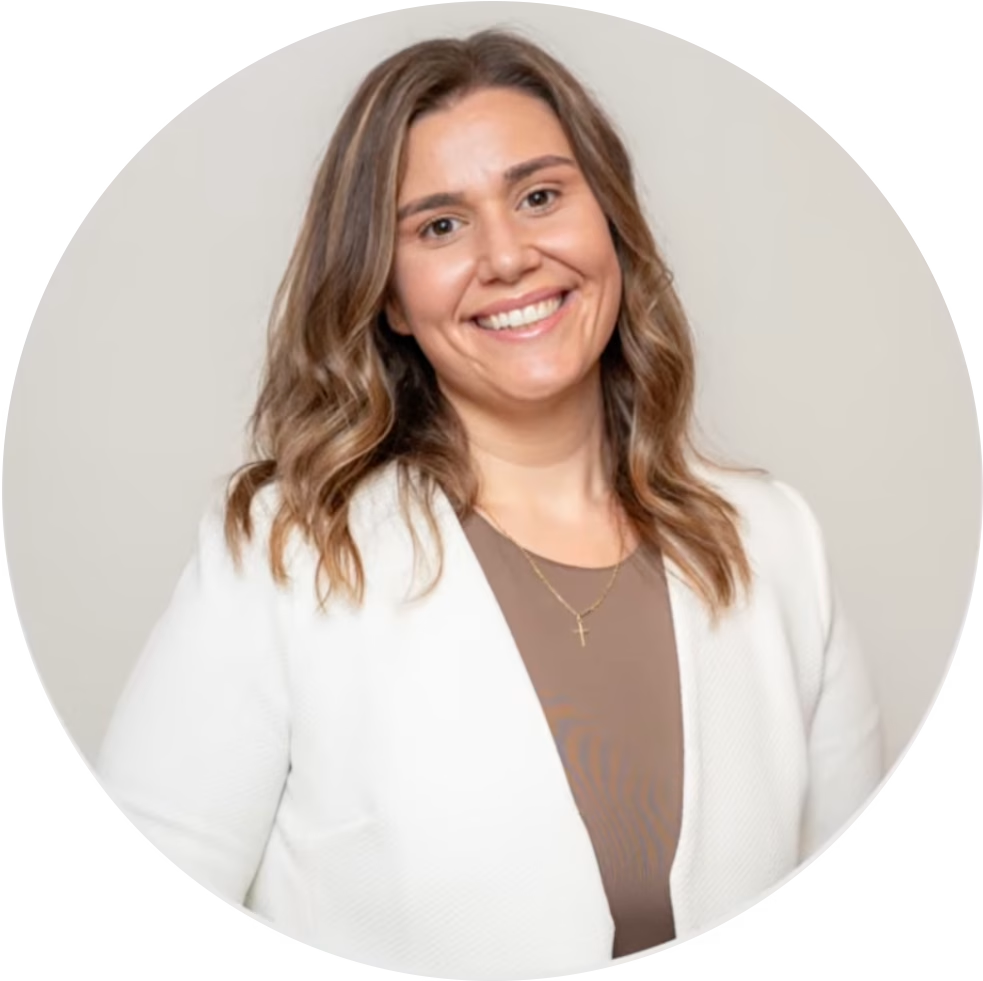
Dr. Adelena Izold is a naturopathic doctor licensed in Arizona who works as a naturopathic consultant, educator, and patient care advocate through Whole Life Naturopathic.
Her interest in personalized healthcare was shaped by her childhood in Italy and her own experience navigating an epilepsy diagnosis as a teenager.
She completed her naturopathic medical education at Southwest College of Naturopathic Medicine in Tempe, Arizona, and discusses additional clinical training and residency experience.
Her work emphasizes patient education, nutrition, lifestyle considerations, and individualized approaches to health. She also describes professional affiliations with Full Circle Health in Oklahoma and ATL Pain Institute in Georgia.
In this episode, she shares her perspective on integrating naturopathic approaches with conventional healthcare and helping patients become more informed participants in their care.