
The world tilts. Your neck throbs, the car door groans, and a dozen questions come crashing in: Who do I call? Where do I even begin? If you’ve ever been injured in a car accident or worked with someone who has, you know that getting the right medical care isn’t always straightforward.
You must find providers, schedule appointments, arrange transport, collect records, and track bills—all while coping with pain and stress.
That’s where care coordination comes in.
Why is Care Coordination So Important After an Accident?
After a car accident, the path to recovery involves more than just seeing a doctor once. It typically requires multiple providers, such as a primary care physician, a specialist, a physical therapist, and possibly an imaging center. Each of these has its own scheduling system, records, and billing process. For example, imagine someone like Maria, 42, suffered whiplash in a rear-end collision and had to coordinate appointments with three different specialists while also arranging transportation—all while managing her pain and paperwork.
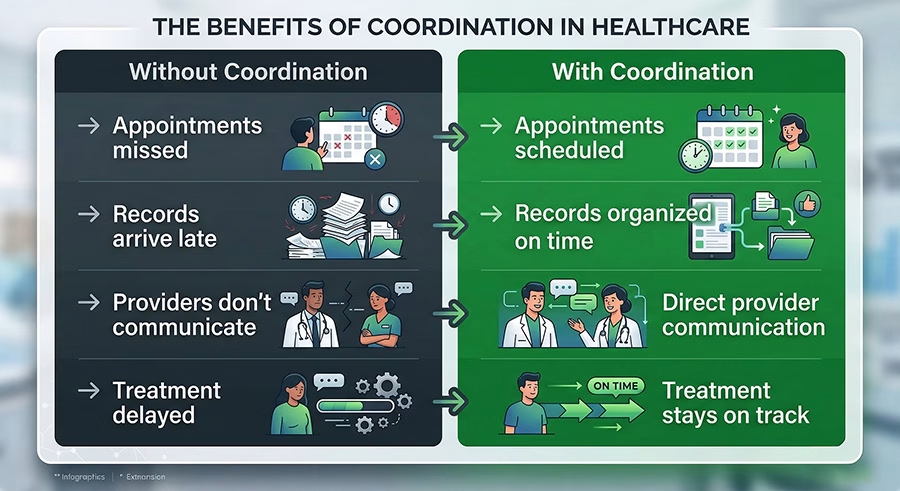
Without coordination, here’s what often happens:
The injured person doesn’t know where to start and delays getting care. Appointments get missed because transportation wasn’t arranged. Providers don’t communicate with each other, leading to gaps in treatment. Medical records arrive incomplete or weeks late. The entire recovery process slows down — not because of the injury itself, but because of the administrative gap around it.
This gap between getting injured and actually receiving consistent care is one of the most common — and most preventable — problems in post-accident recovery.
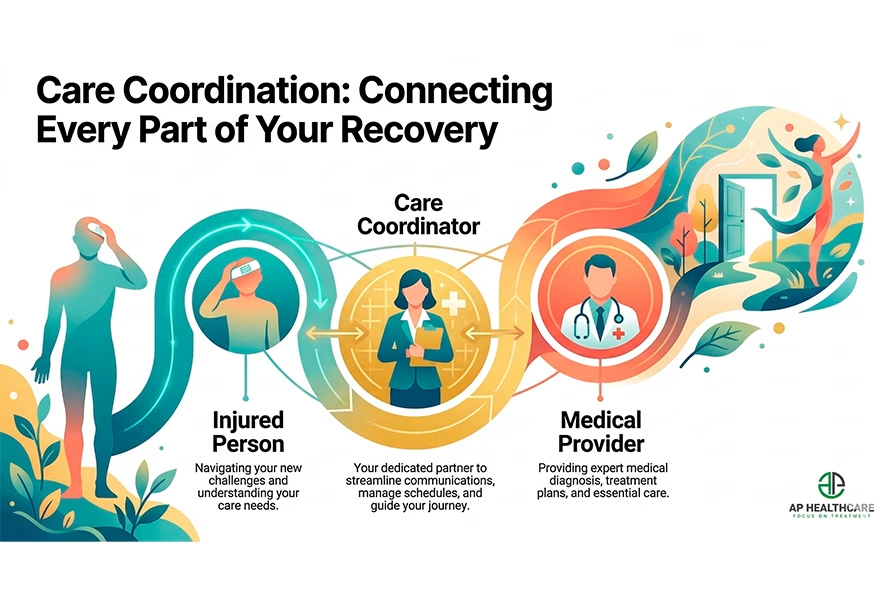
What Does Care Coordination Actually Look Like?
In practice, comprehensive care coordination after an accident includes connecting the injured individual to experienced providers who understand post-accident injuries, scheduling appointments in a timely manner, arranging transportation and translation services so appointments aren’t missed, communicating directly with providers to track treatment progress, collecting and organizing medical bills, records, and treatment notes, and keeping all relevant parties informed throughout the process.
When done well, care coordination removes the logistical burden from everyone involved and keeps the focus where it belongs — on the injured person’s recovery.
The Difference It Makes
The difference between coordinated and uncoordinated post-accident care is significant. Without coordination, treatment is fragmented, records are scattered, and recovery takes longer than it needs to. With coordination, there is a clear process, consistent communication, and organized documentation from day one through case resolution.
It's not a luxury. For someone navigating the aftermath of a traumatic accident, it's essential support.
How AP Healthcare Approaches Care Coordination
AP Healthcare was founded with one goal: to make post-accident care more accessible, more organized, and less overwhelming for everyone involved.
Our care coordination team works directly with injured individuals to connect them to experienced providers, arrange transportation and translation services, track treatment progress, and organize all medical documentation throughout the process.
We handle the logistics so that injured individuals can focus on recovery — and the legal and medical professionals supporting them can focus on what they do best.
To learn more, visit aphealthcare.org or call (404) 850-9600.
This article is for informational purposes only and does not constitute medical or legal advice. Please consult a qualified healthcare provider for guidance specific to your situation.