
The Injury That Doesn't Always Announce Itself
Concussions are among the most common and misunderstood injuries. After a car accident, this misunderstanding can result in injuries requiring professional evaluation being overlooked for weeks, quietly impacting daily life.
Defining the Injury: What Is a Concussion?
According to the CDC, a concussion is a traumatic brain injury caused by a bump, blow, or jolt to the head. It can also result from a blow to the body that causes the head and brain to move rapidly. This sudden movement can cause the brain to bounce or twist within the skull, triggering chemical changes and sometimes stretching or damaging brain cells.
A concussion is currently defined as a pathophysiologic process that results from an acceleration or deceleration of the brain induced by trauma. It is largely a temporary, functional problem rather than a gross structural injury.
Simply put, the brain does not need to strike the skull directly for a concussion to occur. The forces from a car collision, even at low speeds, can be enough to cause this injury.
Symptoms — And Why They're Often Missed
Concussions after car accidents are often complicated because symptoms are subtle, easily mistaken for stress or fatigue, and may not appear immediately after the crash.
Symptoms and signs after a concussion are highly variable and multidimensional. This makes it hard to define a generally applicable treatment. The most common symptoms include headache, dizziness, sleep disturbance, cognitive problems, and emotional difficulties. Cleveland Clinic Journal of Medicine
Other symptoms may include sensitivity to light or noise, nausea, memory gaps, and difficulty finding words. Some individuals experience slowed thinking. According to the Centers for Disease Control and Prevention (CDC), healthcare providers may refer to these injuries as mild because they are not usually life-threatening. However, the effects of mild TBI or concussion can still be serious.
Timing is especially important after an accident. A concussion, as a mild TBI, may be temporary but can take minutes to months to heal. According to the National Institute of Neurological Disorders and Stroke, symptoms may not appear for days, leading individuals to dismiss lingering effects from the accident.
When Concussion Becomes Something More
Not every concussion resolves within the typical two to six weeks. Post-concussion syndrome is diagnosed when symptoms persist much longer. Some symptoms are subtle, so it is important to monitor your condition and seek care if something feels wrong after a concussion.
There is also an important consideration for individuals who have experienced previous head injuries. A person with a history of multiple or repeated mild TBIs or concussions may experience a longer recovery or more severe symptoms. They may also have long-term problems, including ongoing issues with concentration, memory, and headache.
A second concussion soon after the first, known as the “second hit,” can cause permanent damage or even death, according to the National Institute of Neurological Disorders and Stroke. Early identification is therefore crucial for anyone with prior head trauma.
Diagnosis: How Is a Concussion Identified?
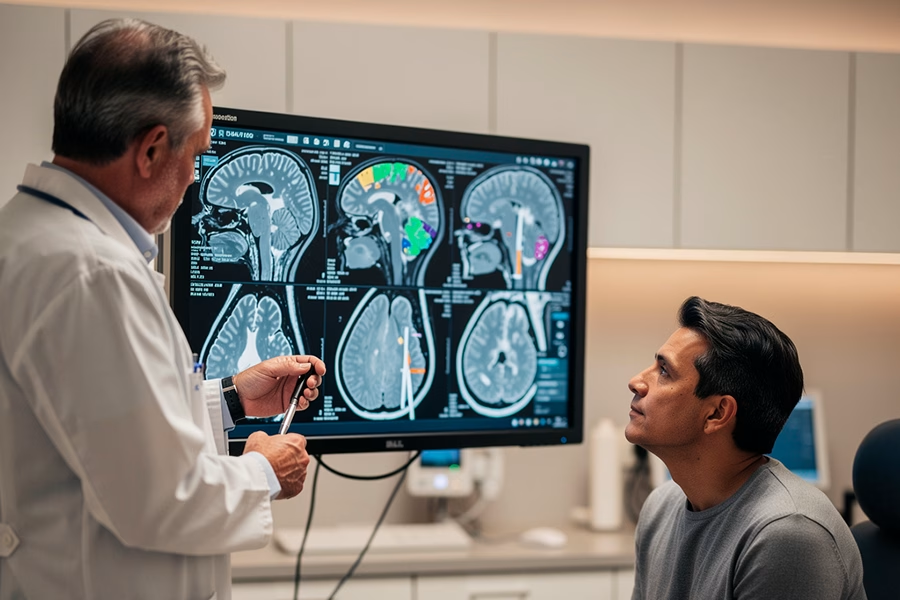
Healthcare providers may ask about symptoms and test memory, concentration, and other cognitive functions. These are called neuropsychological or neurocognitive tests. They help identify the effects of a mild TBI or concussion. Even if the injury does not show up on these tests, a mild TBI or concussion may still be present.
A brain scan, such as a CT scan, is not always needed to identify a mild TBI or concussion. However, it may be used if there is a risk of intracranial bleeding after injury.
The absence of visible findings on imaging does not rule out injury, as noted in current clinical guidelines. Concussion is a functional diagnosis, per expert consensus. The clinical picture—including history and symptom timing—guides evaluation, as outlined in published protocols.
Why Consistent Follow-Up Matters
No direct treatment exists for the physiology of concussion. Early treatment of symptoms, along with education about recovery and accommodations, aids functional recovery.
For many accident victims, the main challenge is not the initial evaluation but consistent follow-up. Scheduling specialist appointments, arranging transportation, coordinating between providers, and organizing documentation across multiple visits can be overwhelming, especially while managing symptoms that affect concentration and daily functioning.
How AP Healthcare Supports This Process
A concussion is difficult to detect, often underestimated, and requires ongoing follow-up care. Managing this alongside the aftermath of an accident can be overwhelming.
AP Healthcare provides concierge post-accident care coordination. We are not medical providers and do not offer medical advice; these decisions remain between the patient and their healthcare team. We manage care logistics, including connecting patients with experienced providers, assisting with scheduling, arranging transportation, and providing translation services when needed.
We follow up, check in, and ensure that the recommended appointments take place. We also make sure that no administrative details are overlooked during a recovery that may last weeks or months.
An injury this easy to overlook deserves support that keeps it from falling through the cracks.