
Most people think seeing a surgeon means getting surgery. In Episode 5 of The Care Cartography Podcast, host Andrei Tsygankov sits down with Dr. Obi Ugwonali, a board-certified orthopedic surgeon specializing in hand, wrist, shoulder, elbow, and microvascular surgery, who says about 90% of his patients can be treated without surgery.
Dr. Ugwonali explains how a surgeon decides when to operate and when not to, why numbness you keep ignoring can lead to lasting damage, why a bone can be broken even if you can still move your hand, and why pain getting better doesn’t always mean an injury has healed.
The conversation also goes inside a shoulder arthroscopy, covers rotator cuff tears and nerve recovery, and explains why a one-hour surgery can mean up to a year of healing, and what patients can do to protect their results.
Guest: Dr. Obi Ugwonali, M.D. — Board-Certified Orthopedic Surgeon; Hand, Wrist, Shoulder, Elbow, and Microvascular Surgery
M.D., Yale School of Medicine · Orthopedic research and residency, Columbia University · Fellowship in hand, shoulder, elbow, and microvascular surgery, Harvard-affiliated institutions
Host: Andrei Tsygankov, CEO of AP Healthcare
This transcript has been lightly edited for readability.
Andrei Tsygankov: Welcome to The Care Cartography, a show about healthcare and having practical conversations with people who understand the healthcare system from different angles — from doctors and nurses to administrators and operators, to coordinators, advocates, and other healthcare professionals who see where the system works, where it breaks down, and what can be done better. I’m your host, Andrei Tsygankov, and today we’re talking about orthopedics — specifically, what makes the shoulder, elbow, wrist, and hand so fascinating, complex, and challenging to heal.
Joining us today is Dr. Obi Ugwonali, a board-certified orthopedic surgeon specializing in surgery of the hand and upper extremity. Dr. Ugwonali completed his medical education at Yale School of Medicine, followed by orthopedic research and residency training at Columbia University, and advanced fellowship training in hand, shoulder, elbow, and microvascular surgery at Harvard-affiliated institutions. Dr. Ugwonali, welcome.
I’m excited to talk with you about your journey into orthopedics, and also to take our viewers through certain procedures you know exceptionally well. I’d also like to explore something patients may not always appreciate: a successful result can depend not only on years of surgical experience, but also on months of work afterward by the patient and the people around them. So let’s start: what originally made you want to become a physician?
Dr. Obi Ugwonali: Thanks, Andrei, for having me. My interest in medicine actually started many thousands of miles away, in Nigeria, where I was born. My uncle was a physician. He trained in England and came back to Nigeria to practice medicine. When I was five, he left his stethoscope on the table. I took it and put it around my neck, and after that, people started calling me “Dr. Obi.” It kind of stuck, and I couldn’t think of being anything other than a doctor. Fast forward to college: I knew I was going to be a doctor, so I majored in biology and economics, and from there went on to medical school.
Andrei Tsygankov: That’s fascinating. So you’ve been Dr. Obi since you were five years old.
Dr. Obi Ugwonali: That’s correct.
Andrei Tsygankov: That’s exactly how I met you.
Dr. Obi Ugwonali: That’s right.
Andrei Tsygankov: When you entered Yale, you had your path set on becoming a physician. Did you have your path set on becoming a surgeon?
Dr. Obi Ugwonali: Interestingly, during my studies at Stanford, I did a general pre-medical summer program at Cornell University, and cardiology was one of the things we studied. I was fascinated by the complexity of cardiology and the ability to do procedures to make people well. So I went into medical school 100 percent sure I was going to be a cardiologist.
But I learned more about myself — that I was a surgeon by nature — and realized that internal medicine and cardiology weren’t my path; one of the surgical specialties was. Through medical school, I looked at different surgical specialties, including urology, plastic surgery, and brain surgery, and orthopedics ended up being a natural fit. As a former athlete, the musculoskeletal system was very important to me, and I had mentors both in and outside of medical school who influenced me toward orthopedic surgery.
Andrei Tsygankov: What did you do athletically?
Dr. Obi Ugwonali: I played soccer growing up in Nigeria and continued playing it here, including in high school. Then I realized that playing at the Division I level at a place like Stanford wouldn’t allow me to continue my path to becoming a doctor. That’s when I realized my football career should end with high school.
Andrei Tsygankov: That path ends for a lot of us.
Dr. Obi Ugwonali: That’s correct — at that level.
Andrei Tsygankov: When we spoke earlier, you said you found it appealing to identify a structural problem in a patient and help correct it. What drew you to that?
Dr. Obi Ugwonali: In medical school, the first two years you go through the basics — physiology, biology, chemistry. In the last two, you essentially audition different specialties. I realized that internal medicine, which I needed to become a cardiologist, involved treating chronic diseases — high blood pressure, diabetes — things that require prescribing medications over time.
Then I took surgical rotations — orthopedics, plastic surgery, gastrointestinal surgery — and I realized I liked the idea of finding out what is physically wrong with a patient, something I know I can treat. Someone walks into my office injured or unwell, I figure out what physical thing is wrong in that body, go in, fix it, and get them well in a few days, a few weeks, or a few months — rather than the chronic management of disease, which is important but didn’t capture my interest. My interest was in a surgical specialty where I could make a difference in someone’s life, get them better quicker, and get them back to where they were before the injury.
Andrei Tsygankov: And see a result — if not right away, very shortly thereafter.
Dr. Obi Ugwonali: Absolutely.
Andrei Tsygankov: Along with your residency at Columbia, you also did research in orthopedics. What was that like, and how did it influence your path?
Dr. Obi Ugwonali: In addition to my five years of orthopedic residency, I did a research fellowship with Dr. Van Mow, who is considered the godfather of orthopedic biomechanics. He ran a biomechanics lab at Columbia, and I spent an entire year studying the biomechanics of the upper extremity — the hand, the shoulder, the elbow. Imagine taking a shoulder skeleton and installing it in machines that let you measure forces and how those forces affect different tissues. It gave me an appreciation of how the human body works, which I still use to this day.
When I treat injured patients, I can say, “This is how the injury occurs; this is how forces affect the body.” Being able to say that as a surgeon who also understands biomechanics puts me in a different category from someone who is purely a biomechanics expert or purely a surgical expert. I combine the two almost daily, and when I’m asked about it, I’m happy to share that knowledge with others.
Andrei Tsygankov: I’m sure your patients benefit from it daily.
Dr. Obi Ugwonali: Absolutely.
Andrei Tsygankov: You pursued your fellowship in hand, shoulder, elbow, and microvascular surgery. What drew you to that subspecialty?
Dr. Obi Ugwonali: Columbia had a very strong orthopedic department, and it was especially strong in shoulder and elbow and in hand and upper extremity. One of my mentors, Dr. Louis Bigliani, was the chairman of orthopedics at Columbia and also head of the shoulder and elbow service. The hand surgery department had its giants too — Dr. Mel Rosenwasser, my mentor at Columbia, was the hand surgeon who taught me microvascular surgery.
By the time I was finishing residency, I couldn’t decide between shoulders and hands, and I realized I didn’t have to pick — why not do the entire upper extremity? There were fellowship programs in upper extremity surgery, and Harvard happened to be at the top at the time. So I did the Harvard upper extremity fellowship, which let me hone my skills in shoulder, elbow, wrist, and hand surgery. I spent a year in Boston before moving to Atlanta with my wife and, at the time, my daughter.
Andrei Tsygankov: It seems that a lot of orthopedic surgeons really do specialize in one joint. Would that be fair to say?
Dr. Obi Ugwonali: Yes, we tend to specialize, but it hasn’t always been that way. Twenty or thirty years ago, most people did a general orthopedic residency, went out into the community, started a practice, and did everything. In the last 20 to 30 years, we’ve moved more toward subspecialties, and you see that more in urban centers. In rural communities, you still see general orthopedic surgeons who do everything — and some of them are really good and have been doing it a long time.
I’m glad to be part of a profession where people know the limits of what they can treat. A general orthopedic surgeon in a community without specialists will refer patients to urban areas where those subspecialists exist. In Atlanta, for example, most surgeons practicing in the city have fellowship training, so you see people who focus on one area: hip and knee replacement, upper extremity, spine, foot and ankle.
For patients to get the best results, it’s good to have subspecialists who spend 99 percent of their time fixing the things that don’t happen often. When something is complex for other surgeons — even upper extremity surgeons — and it’s specific to what I’ve been doing for the last 20 years, they send it to me. And vice versa: if I run into something outside my subspecialty, I send it to doctors who subspecialize in that field.
Andrei Tsygankov: Do you feel that’s ultimately beneficial to the patient?
Dr. Obi Ugwonali: Absolutely, 100 percent. As a patient, I’d want to go to the person who is the expert in that area — the one people come to. Ultimately, patients get better results because that person does it day in and day out.
Andrei Tsygankov: So is it really just about the reps?
Dr. Obi Ugwonali: Not only the reps. It’s also staying abreast of the most current literature and procedures, and understanding the outcomes of different procedures for that particular body part.
Andrei Tsygankov: That’s a great point. I’ve read that thousands of new articles come out every year — it’s physically impossible to read them all. How do you deal with all that new information?
Dr. Obi Ugwonali: That’s why board certification is important. Orthopedic surgeons have their board, the American Board of Orthopaedic Surgery; plastic surgeons have theirs; general surgeons have theirs. Those boards require you to stay current in your profession — going to conferences and reading peer-reviewed articles. Not every article is peer-reviewed, so knowing which articles to read is extremely important. A lot of articles add to the literature, but they’re not necessarily the ones to read if you want to stay current on the latest recommendations.
Andrei Tsygankov: From a musculoskeletal perspective, the hand is very intricate. What makes hand and wrist surgery in particular so challenging?
Dr. Obi Ugwonali: It can be challenging in multiple ways. One is the size and density of the area. The hand and wrist have many more bones than, say, the hip, which essentially involves two bones: the femur and the pelvis it articulates with. The hand has multiple bones, smaller structures, nerves, and ligaments that can go wrong. In areas with a high density of structures, you have to wear magnification so you understand every structure and don’t inadvertently injure one that shouldn’t be injured. Even something as simple as a trigger finger — where the finger locks up when people close their hand — requires careful dissection to protect the nerves and arteries while releasing the tissue.
Andrei Tsygankov: And how do the nerves add to the complexity?
Dr. Obi Ugwonali: Nerves are extremely important, and people don’t realize it until they have something like carpal tunnel syndrome. Nerves don’t just give you sensation; they can also cause pain when they’re compressed. So handling those structures carefully is extremely important.
Andrei Tsygankov: When a patient comes to you after an injury or traumatic event, how do you determine whether the problem is primarily bone, tendon, ligament, cartilage, nerve, or muscle?
Dr. Obi Ugwonali: The first thing they teach you in medical school is that the history is extremely important. It’s important for a physician to listen carefully to the patient. I tell my patients they’re smarter than me, because they know their body better than I do — so it’s up to me to listen. You would not believe the number of patients I see on a daily basis who say, “You’re the first doctor that actually listened.” You can learn so much from the patient.
The second thing is the exam. Too often, I’d say, younger physicians rely too much on imaging — X-rays, CTs, MRIs. Those are important, but the history and the exam are where you make 90 percent of your diagnosis. Imaging helps you confirm it. You should be fairly certain what you’re looking for whenever you order imaging; you don’t just order something to find out what’s going on.
Examining the patient means first looking at them: Is there swelling? Where are they tender? How much can they move? Look at their face — are they wincing when you move the body part? You palpate and check for any block to motion. You take all of that into consideration to say, “I think this is a bone.” For example, if a bone is broken, it’s usually very hard to move without severe pain. But sometimes there’s a lot of pain for other reasons — a patient with a frozen shoulder has an inflammatory component, so they can seem like someone who broke their arm because it’s so painful when you try to move the shoulder. All of that goes into determining what’s going on. Then, finally, you get imaging: an X-ray first to look at the bones, and then an MRI or CT scan if necessary.
Andrei Tsygankov: So from what you’re saying, 90 percent of the time you already know what the issue is before the imaging is in front of you.
Dr. Obi Ugwonali: Yes. That’s what we call a differential diagnosis — the list of possible things that could be going on, which you form in your mind before you get imaging. Then, when you get the MRI, you’re looking to confirm those things. But on an MRI or X-ray, you should also look for other things — for example, a tumor you can sometimes pick up — so you’re ruling things out as well as ruling things in. That’s the lingo we use in medicine.
Andrei Tsygankov: When you evaluate a patient, what makes you say, “This can probably recover without surgery,” versus, “We need to fix this”?
Dr. Obi Ugwonali: Good question. Whenever you evaluate a patient, it’s important to ask: what are the things that, if not addressed immediately, could lead to long-term complications? If there’s nothing that would lead to long-term complications if left alone, we tend to steer toward the conservative path — not doing surgery.
One of the oaths we take in medicine is “do no harm.” Sometimes doing nothing is actually better than doing something, because although we’re very skilled, there are still risks with surgery. Just with anesthesia, when you intubate someone, something can go wrong — they can aspirate, get pneumonia, or even develop a blood clot. So we take surgery extremely seriously, which is why we advocate for surgery only as a last resort.
On the other hand, say someone was in a motor vehicle accident and injured their neck, and testing shows a disc herniation or even a laceration of a nerve — you know that’s going to be a serious problem down the line. In that situation, it makes more sense to go straight to surgery, because if you don’t, they may be left with a permanent nerve injury for the rest of their life. So it’s always important to figure out first: is there something that could leave them with a really bad problem down the line, or is this something that will more than likely resolve on its own over time?
Andrei Tsygankov: That’s a very difficult balance to strike. It’s a judgment call that requires a lot of experience and, as you mentioned, knowledge of the latest peer-reviewed literature — what actually works.
Dr. Obi Ugwonali: Absolutely.
Andrei Tsygankov: It seems a lot of patients assume that seeing you means surgery.
Dr. Obi Ugwonali: That’s correct.
Andrei Tsygankov: Is that always the case? In your experience, how often is it not?
Dr. Obi Ugwonali: I tell patients: surgeons obviously went into the profession because they like to operate. But a good surgeon is actually one that knows when not to operate. If you’re a decent surgeon, you’re probably operating 10 percent of the time or less. So 90 percent of our patients can be treated without surgical intervention.
Andrei Tsygankov: With physical therapy or some other kind of conservative treatment?
Dr. Obi Ugwonali: Absolutely. People get injured in so many different ways, and there’s immobilization with a cast or brace, therapy, medications, avoiding certain activities for a certain amount of time. And believe it or not, most people get better. That’s why I tell patients all the time: don’t be afraid to go see a surgeon. It’s better to know, so you can plan your treatment. If you need surgery, they’ll recommend it eventually. If you don’t, a good surgeon will tell you surgery isn’t necessary.
Andrei Tsygankov: Are there conditions or symptoms in the upper extremity that patients should never ignore?
Dr. Obi Ugwonali: Yes. We mentioned nerve injuries earlier. If you start having numbness in your upper extremity and it becomes constant — meaning it doesn’t go away — that’s a concern. A lot of us have woken up with numb fingers that go away a few minutes later. But if your finger is numb all day long, something is wrong, and you need to see someone to make sure you don’t have advanced carpal tunnel syndrome.
Andrei Tsygankov: When you say “advanced,” what could happen if it’s left untreated?
Dr. Obi Ugwonali: Numbness is a sign that the nerve is being compressed. If left alone, it can lead to muscle dysfunction. When muscles stop getting stimulation from a nerve, they can atrophy, and that can be irreversible. With carpal tunnel, the thenar muscle — the muscle at the base of the thumb — can start to deteriorate if someone ignores their numbness for many months. And you don’t realize how important the thumb is until it’s too late. Once the muscle has atrophied, you can do carpal tunnel surgery to keep it from getting worse, but it’s extremely difficult to get that muscle back.
Andrei Tsygankov: Let’s take everyone into your office — the operating room. Shoulder arthroscopy is one of the procedures in which you have a lot of expertise. What is it?
Dr. Obi Ugwonali: Shoulder arthroscopy is one of the procedures I do well and do a lot of. For example, I did three today.
Andrei Tsygankov: Thank you for being here — that seems like a lot.
Dr. Obi Ugwonali: You’re welcome. It’s a procedure that requires good hand-eye coordination. You bring the patient to the operating room and put them in the beach chair position, where the patient is sitting up. If you trained in the Northeast, you usually use the beach chair position; surgeons who trained on the West Coast sometimes use the lateral position. Beach chair is how I trained.
Once the patient is asleep and positioned, you clean the skin and make tiny incisions in the shoulder. One is for the camera — there’s a big screen in the operating room that shows you what you’re doing. Another portal is where you bring in your instruments: a shaver, a cautery device, or anchors, screws, and sutures to fix whatever is wrong. On the shoulders I did today, for example, I treated patients with rotator cuff tears, labral tears, shoulder impingement — bone spurs causing problems — and SLAP tears, which some people associate with baseball players: a tear of the labrum where the biceps attaches. Those are all things you can fix with shoulder arthroscopy.
Andrei Tsygankov: How small is the actual incision, for those of us who aren’t familiar?
Dr. Obi Ugwonali: Usually less than an inch long. When you finish, it’s very cosmetic. Thirty years ago, we used to make really big incisions. One thing we take for granted is that, in the past, many people spent four or five days in the hospital after shoulder surgery. Now we can do these under regional anesthesia — a block that numbs just the arm — and within an hour of the surgery, they’re in their car heading home with their family. Shoulder arthroscopy, and surgery in general, has been modernized over the last 20 to 30 years so that we can do really complex surgeries and have patients go home the same day.
Andrei Tsygankov: When we spoke earlier, you said arthroscopic surgery is kind of like playing a video game. What does that feel like as a surgeon?
Dr. Obi Ugwonali: As I said, it requires good hand-eye coordination, because although you’re operating, you’re looking at a screen. You’re not looking at the structure directly — you’re using the screen to know where you are while your hands move, and you have to coordinate your hands with what you see. It’s almost like playing a video game, which is one of the fun things about it. So all you kids out there who play video games — there’s an opportunity for you to be a surgeon one day.
Andrei Tsygankov: Assuming they make it through medical school and residency.
Dr. Obi Ugwonali: That’s correct.
Andrei Tsygankov: You mentioned rotator cuff tears. How does one occur?
Dr. Obi Ugwonali: In multiple ways. Some people walk into my office and say, “Doc, for the last few months I’ve had shoulder pain. It used to go away after a few days, but recently it’s persisted.” “Have you had any recent injuries?” “No, nothing.” You get an MRI, and they have a tear. So some tears just happen over time.
Then there are patients who slipped and fell, or were in a motor vehicle accident holding onto the steering wheel and had significant trauma that caused the tear. They come in, we start conservative treatment first, and a month or two later they’re still in pain. You get an MRI and see a tear. So it can be caused by trauma, or it can be insidious.
Cadaver research done at Columbia before I was there found that people 50 and over are more likely to have bone spurs and other changes that contribute to rotator cuff tears. That’s why, as you get older, if you’re involved in a traumatic event — playing football with your kids, an accident, a fall — someone 50 or over is more likely to tear their rotator cuff than someone who’s 15, 16, or 17. So age helps characterize who’s more likely to have which injury. If I see a young person, I’m thinking more about a labral tear; with an older person, I’m thinking more about a rotator cuff tear. That’s an oversimplification, but it’s a useful way to think about it, because rotator cuff tissue isn’t the same quality as you get older.
Andrei Tsygankov: Does every tear need to be repaired?
Dr. Obi Ugwonali: No. My rule of thumb: if it’s 50 percent or more, I tend to think it will probably progress to a full tear. If it’s less than 50 percent, we give the patient a chance to get better — sometimes with a cortisone injection, anti-inflammatories, and therapy. Recently, we’ve had really great results with PRP and other biologics, giving the body a chance to heal itself. If patients do well, you leave them alone. But if they still fail, even with tears under 50 percent, I’ll recommend surgery, because those tears have now declared themselves as likely to progress over time.
Andrei Tsygankov: There may be a misunderstanding among people who’ve had one of these procedures about how much healing still has to happen after you’re done. What does the healing process look like after you send them home?
Dr. Obi Ugwonali: The biology of healing tissue is that it takes time. Six weeks in a sling, to let the tendon or cartilage physically heal down to the bone. Then you’re looking at three to four months of therapy on average, though some patients take six months to a year. I tell my patients: for that first year, expect to be in the healing process, and try to avoid going back to the same physical demands you were putting on yourself before. So yes, it takes a long time. Even though it takes me an hour to an hour and a half to do these procedures, patients can be healing for up to a year.
Andrei Tsygankov: You said something interesting when we spoke earlier: a procedure might take 30 minutes, but it can take 20 years to learn to do that 30-minute procedure well.
Dr. Obi Ugwonali: Absolutely. The more we do these procedures, the more facile we get with them. People might say, “You can do this in 20 or 30 minutes,” but it took 20 years to get to the point where I can do it that way. It’s like everything — the more you do something, the more proficient you become.
Andrei Tsygankov: How much of it is formal knowledge and training versus repetition? If you had to assign a balance, what would it be?
Dr. Obi Ugwonali: You can’t get the skill set without the formal knowledge. But the reason surgical training takes so long is that we’ve learned that to become proficient, you have to do many of them, which is why residency involves tracking the number of certain procedures you’ve done. I tell a lot of young future doctors: when you go to training, make sure you’re at a place where you get a lot of hands-on experience, because the more hands-on experience you get, the more likely you are to become a good surgeon over time.
Andrei Tsygankov: So the answer is, you need both.
Dr. Obi Ugwonali: You need both. That’s correct.
Andrei Tsygankov: Nerve reconstruction is also part of your practice. How difficult is it, and how important is it to healing overall?
Dr. Obi Ugwonali: Nerve reconstruction is extremely important. One of the skill sets is being able to fix both large and small nerves, and when you get to the fingers, the nerves become really small, so working under a microscope or with loupe magnification is essential. If a nerve has both sensory and motor branches, connecting them in the right orientation is important, because if a branch is connected to the wrong counterpart, you may not get the right signal. If they aren’t connected well, there will be functional problems down the line.
Andrei Tsygankov: What happens when a peripheral nerve is injured?
Dr. Obi Ugwonali: There are multiple pathways. With a crush injury, where the outer part of the nerve is injured, the nerve can have difficulty conducting signals from one area to another. If it’s a peripheral nerve with both sensory and motor functions, and the motor end plate — where the nerve innervates the muscle — doesn’t get stimulation, you get muscle atrophy. That’s why, when there’s an injury, it’s important to address all the components; if you don’t, certain things won’t work well.
Andrei Tsygankov: Can nerves actually heal themselves?
Dr. Obi Ugwonali: Yes, nerves can heal themselves. One thing we continually assess at every visit is whether there’s been progress. If there’s an injury around the elbow, at the next visit you look at whether nerve recovery has progressed further down the arm. If a nerve is cut and you reattach it, it takes about a month for the connection to occur, and after that, recovery moves about one inch per month. So when I do a nerve release — for example, a cubital tunnel release, which releases the ulnar nerve at the elbow — I tell patients that numbness at the very tip of the pinky could take six to nine months to resolve, because the nerve recovers very slowly down the arm.
Andrei Tsygankov: For those of us not familiar with it, what does nerve reconstruction actually entail?
Dr. Obi Ugwonali: There are different types. With a really bad injury where a segment of nerve is missing, you can take a piece of nerve from elsewhere — the lower extremity, or another part of the arm — and place it where the segment is missing. You can also transfer a nerve branch that’s less essential over to another nerve to restore function that has been lost further down. And sometimes we use a cadaver nerve — there are banks of cadaver nerves — so we don’t leave the patient with a new numb area, for example in the foot or leg, from harvesting their own nerve.
Andrei Tsygankov: How likely is that to work and for the patient to regain function?
Dr. Obi Ugwonali: Very likely, which is why we’re doing it more and more these days.
Andrei Tsygankov: Is there anything that determines whether a patient will regain sensation or movement — a common thread among the patients who do well?
Dr. Obi Ugwonali: Yes — timing is important. Take a brachial plexus injury, for example.
Andrei Tsygankov: Which is what?
Dr. Obi Ugwonali: The nerves that come from your neck pass through the shoulder area, and that’s called a plexus, because that’s where the nerves cross over. From there, they branch and come together to form the median nerve, the ulnar nerve, and the radial nerve. With an injury up there — or with a more defined nerve further down the arm — you want to get to it within a certain amount of time. We usually say six months, because if the nerve is disconnected long enough, you lose the ability to regain the muscle that nerve innervates. So it’s important to determine whether the nerve will recover on its own or whether you need to do something reconstructive to make sure stimulation reaches that muscle within the six-month to one-year mark.
Andrei Tsygankov: That calls back to something you said earlier: don’t ignore numbness or weakness. Get it seen early, because otherwise it may lead to more chronic problems or an inability to recover later.
Dr. Obi Ugwonali: Absolutely.
Andrei Tsygankov: Is there anything a patient can do to undo all the hard work you’ve done?
Dr. Obi Ugwonali: Yes, absolutely. Patients can easily undo all the work we’ve done, which is why you start assessing patients as soon as they walk in the door: is this patient likely to be compliant? Then you spend a lot of time educating them. With shoulder surgery, for example, we tell them beforehand, “You’ll have to wear this sling for six weeks,” so they understand and aren’t surprised when they wake up with it. We set expectations, because if they don’t do those things, they can undo everything. If you take off your sling and start using the arm freely, you can easily re-tear everything that was repaired. Patient compliance is underestimated, but it’s one of the most important factors in the success of any procedure.
Andrei Tsygankov: What about the opposite — someone who refuses to move? “I’m just going to lie in bed for the next six months.”
Dr. Obi Ugwonali: That’s also a problem, because you can develop contractures in the hand, wrist, elbow, and shoulder — in the shoulder, we call it a frozen shoulder. Some people develop a frozen shoulder because they refuse to move when they should be doing therapy, not only at the therapy location but also at home.
Andrei Tsygankov: There seems to be a very symbiotic relationship between orthopedic surgeons and physical therapists. How important is that relationship, and how often do you communicate?
Dr. Obi Ugwonali: It’s extremely important. Every orthopedic surgeon has their favorite therapists. Patients see me for 30 minutes to an hour, but they see their therapists twice a week for many weeks. So it’s important that the surgeon and the therapist have a good relationship, because sometimes the therapist picks up on something I didn’t, since they see the patient routinely. They have my cell phone and my email, and they’ll reach out: “Hey, Doc, this is what I’ve noticed,” and I’ll have the patient come in. They are my eyes and ears. I often joke with my therapists that they make me look good as a surgeon. Having good therapists is important, and the relationship between the doctor and the therapist is even more important.
Andrei Tsygankov: What separates patients who have a great recovery from those who don’t?
Dr. Obi Ugwonali: Sometimes it’s not predictable. We tend to recommend surgery when we think we have a really good chance of getting the patient well, so for the most part — around 95 percent — patients get better. But 1 to 5 percent don’t. Sometimes it’s just luck. But some people have wound-healing problems: if you’re diabetic, you’ll take longer to heal and you’re more likely to get an infection; if you have a rheumatologic condition, your procedure may not work as well. Depending on the procedure, different factors can lead to a less successful result.
One thing we make sure to do is optimize patients. Not every patient who needs shoulder surgery can go to surgery the next week. If someone is morbidly obese and at high risk for anesthesia, it may take two or three months on a weight-reduction program to get to a point where anesthesia is safe. If their diabetes isn’t well controlled, it may take a few months working with their primary care doctor on medications before surgery is safe. Diabetics have a lab value called hemoglobin A1C. If you operate on someone with a very high A1C — meaning their blood sugar is consistently high — there’s a higher risk of infection and a lower healing rate. That’s why, as doctors — even as surgeons — we have to think about all the medical factors that could be controlled before electing to take someone to surgery.
Andrei Tsygankov: So comorbidities or other problems the patient has can affect anything you do for them.
Andrei Tsygankov: When it comes to traumatic injuries, which upper-extremity injuries do you commonly see?
Dr. Obi Ugwonali: All the things we’ve talked about so far. Torn ligaments — the ones that come to mind most are scapholunate ligament tears in the wrist, and ligament tears around the elbow. Rotator cuff tears, labral tears. Fractures — broken bones in the hand, wrist, elbow, and shoulder. Any tissue in the musculoskeletal system can be injured by trauma.
Andrei Tsygankov: Can some of those injuries make an appearance days or weeks after the accident or incident that caused them?
Dr. Obi Ugwonali: Sure. Sometimes people don’t realize they have fractures. Most people get injured and don’t always seek care immediately; then they realize, “This has been going on for two or three weeks.”
Andrei Tsygankov: With broken bones?
Dr. Obi Ugwonali: With broken bones, yes — though often it’s not severe. With a severely deformed bone, you know something serious happened. But it could be a small fracture in the hand; you get an X-ray, and there’s a broken bone. A lot of those fractures can be treated conservatively.
Andrei Tsygankov: What would you want patients to know about the difference between pain improving and an injury actually healing? Those can be two different things, right?
Dr. Obi Ugwonali: You’re absolutely correct. Your pain can improve even though the injury isn’t healed. Some patients with full-thickness rotator cuff tears can rehab to the point where they no longer have the same amount of pain — but the tear hasn’t healed. Fast forward five, ten, twenty years, and they can develop debilitating arthritis that’s no longer fixable by repairing the rotator cuff.
That’s why, if we diagnose someone with a full-thickness rotator cuff tear, we recommend surgery right away. If you leave a full-thickness tear alone — say a patient says, “I can’t do the surgery now, maybe in six months” — it can go from a repairable tear to one that’s no longer repairable six months or a year later, because the tendon has retracted so far from where it’s supposed to attach that you can’t pull it back. So yes — the pain can improve in the short term, but that doesn’t mean you’ve healed the damaged tissue.
Andrei Tsygankov: So, again: don’t wait. Get an evaluation, and if the recommendation is to get it done now, get it done now — even if the pain subsides, there may be problems down the road you want to avoid.
Dr. Obi Ugwonali: That’s correct.
Andrei Tsygankov: What are one or two procedures you learned in training that are now done completely differently?
Dr. Obi Ugwonali: In training, I learned open carpal tunnel release, where you make an incision to free the median nerve. Since then, I’ve trained myself to do it endoscopically, because new techniques made it safe. One concern with endoscopic carpal tunnel release was the risk of injuring the median nerve, but newer techniques let you make small incisions, go in with a camera, and release the ligament compressing the median nerve with very low risk to the nerve. I’ve been doing that for the last ten years, and I didn’t do it in training. There are a few other procedures I’ve learned on my own as well. That’s why it’s important to keep learning — being trained doesn’t mean you stop learning. As a surgeon, you have to continue to learn.
Andrei Tsygankov: Where do you think orthopedic surgery, and upper-extremity surgery specifically, is headed over the next ten years? Earth-shattering changes, or gradual improvements?
Dr. Obi Ugwonali: I think there will continue to be gradual improvements. We live in an AI era that will help improve certain things, but I don’t expect AI to take over surgery.
Andrei Tsygankov: Unlikely.
Dr. Obi Ugwonali: Unlikely. But it will give us tools to be more efficient — documentation in the office, things like that. As far as surgery, we’ll continue to make progress. Robotic surgery is used in some areas of orthopedics, but not very much in the upper extremity. So over the next ten years, progress will probably be more gradual than sudden.
Andrei Tsygankov: AI is all the rage, and no one’s claiming it will replace what you do. But identifying patterns and surfacing findings that others can then study in more depth seems like a great use of it. What do you think?
Dr. Obi Ugwonali: Absolutely. AI has revolutionized a lot of things. At Stanford, where I did my undergrad, there are labs using AI to predict how a gene sequence translates — from DNA to RNA to protein. Over time, they’ve used AI not only to predict what a protein will look like, but to design other proteins that can regulate certain processes, helping them discover drugs much faster. I think AI is amazing and will continue to improve our lives. Everyone has concerns about AI, and so do I, but if we continue to use it responsibly, it will be an incredible boost to medicine and to our lives.
Andrei Tsygankov: What misconceptions about orthopedic surgery would you want to correct?
Dr. Obi Ugwonali: We mentioned earlier that most people think if you go to a surgeon, you’re going to get surgery. Hopefully I’ve educated people that that’s not true. Another thing people say is, “If I can move my hand and fingers, I don’t have a broken bone.” You can still move and still have a broken bone. There is a chance that a bone is broken even if you can move your hands, your elbows, or your wrists. So if you think you have a serious injury, even if you can move the joint, still go get it checked out.
Andrei Tsygankov: Throughout your training and career, you’ve seen many, many patients. What have they taught you?
Dr. Obi Ugwonali: Every day I continue to learn from my patients. Even with diagnoses I’ve seen thousands of times — carpal tunnel, trigger finger — each patient brings something different. People think orthopedic surgeons only deal with bones, muscles, tendons, and ligaments, but you have to take the whole patient into consideration.
A lot of times you walk into a room, assess the patient, and ask: what type of treatment are they likely to want? And you work with them. It’s more of a partnership than me walking in and saying, “This is what you’re going to do.” At the end of the day, it’s a partnership between the doctor and the patient, because every patient — no matter the diagnosis — is completely different. Psychology is involved. Cognitive and neurological issues are involved. Someone involved in an accident can have a traumatic brain injury or psychological issues, and all of that affects your ability to treat their musculoskeletal injuries. That’s why it’s extremely important to diagnose and treat those things too; if you don’t, the patient will be left with a lot of pain and won’t get better.
I treat a lot of patients with really severe hand injuries, including hand and finger amputations. You might think, “It’s just a finger — they’ll get over it.” But then you step back and realize this was part of who they are, and there’s a psychological component. Will they be able to get back to where they were before? Is there post-traumatic stress disorder? Does this person need vocational retraining? Will they need a different job, or a different role within the same company? Those are all things you have to manage to restore them to the lives they had before. If you don’t listen to those patients and only see them as an injury, you can lose that patient very quickly. That’s why I take the time to really connect with my patients — to know who they are, what their life challenges are, and what this injury means to them in the whole frame of who they are and how they see themselves, as providers or whatever it may be. As a surgeon, if you don’t take those things into consideration and help patients navigate that journey, you’re not serving your patients well.
Andrei Tsygankov: So there’s a much deeper psychological — almost therapist — component to this, in addition to being a surgeon.
Dr. Obi Ugwonali: Absolutely. I think that’s what separates clinicians who have great experiences and results with their patients from those who may not. If you don’t take those things into consideration, it can affect the physical results you’re trying to achieve.
Andrei Tsygankov: If there’s one takeaway you’d want people watching to leave with, what would it be?
Dr. Obi Ugwonali: As I’ve matured in my practice — I’ve been a doctor for going on 30 years; I finished medical school in 1999 — I’ve noticed that in medicine we’ve always been taught to fix problems rather than avoid them. We now live in an era where people have a real opportunity to take care of themselves and minimize their need for medical care: nutrition, wellness, exercise, and some of the newer medications, like GLP-1s, which have helped some of my patients who were diabetic or obese lose weight and become healthier.
They walk into my office with an injury, I talk to them about these options, they lose weight, and they take control of their health — and maybe live ten or twenty years longer than they would have. So it’s important for people to think about everything we now know about taking care of ourselves, so they can avoid having to see me as a surgeon, or any other type of doctor. In medical school, we learn to treat diseases and injuries rather than to teach people how to be healthy and live in a way that keeps them out of the medical system. If you need us, we’re trained, and we can do it. But for me, it’s now more important to contribute in a broader sense — to communicate to people that taking the time to figure out which foods are good for you, which foods you’re sensitive to, staying healthy, and exercising are really important things that can help you live a healthier, longer life.
Andrei Tsygankov: And not just a longer life — a better life, where you can do more in those extra years.
Dr. Obi Ugwonali: Absolutely.
Andrei Tsygankov: So a holistic approach matters even in surgery — because, as we discussed, if you address those comorbidities, patients recover better, even when you do have to operate.
Dr. Obi Ugwonali: Absolutely. Exactly.
Andrei Tsygankov: Final question: if you could change one thing about healthcare in America today, what would it be?
Dr. Obi Ugwonali: Wow — that’s a loaded question. I think healthcare has become more of a business than it was for doctors in the past. It has become a commodity, and doctors are less and less part of the decision-making. There’s a huge movement where doctors who used to be independent now have to work with private equity or join health systems, because they can no longer practice as individual practitioners — negotiating with health insurance companies and so on.
That may just be the progression of business, but I’m hoping there are ways to structure healthcare in the future so doctors are more involved in decision-making. When doctors are removed from day-to-day decisions in healthcare, that’s where you get a disconnect and less-than-optimal results. Doctors should be involved at all levels — working with health insurance companies, at the management level of health systems, and, if they choose, with private equity or whoever else. Those can all be good things, but there has to be involvement from physicians who understand medicine and what it takes to deliver great care. Once business people are making business decisions that aren’t necessarily healthcare decisions, that’s where you start to see problems.
So I’m hoping that, as things consolidate, doctors are central to those consolidations, so they can make the decisions that are critical to keeping patient care at the very top of every decision. Once you remove that, we’re not serving our patients — we’re only serving investors and shareholders.
Andrei Tsygankov: Dr. Ugwonali, thank you very much for joining us today. It’s been a pleasure speaking with you, and this has been wonderful.
Dr. Obi Ugwonali: Thank you, Andrei. It’s been an honor to be invited on the show, and I’m glad I was able to share my thoughts with your audience.
Andrei Tsygankov: Thank you very much for joining us today. We hope you found this episode interesting and informative. Please like and subscribe, and if you have a question or comment, leave it in the comment section below. Our contact information will also appear in case you’d like to reach out. Thank you very much.
This podcast is for educational and informational purposes only and does not constitute medical or legal advice. Treatment decisions depend on each patient’s individual situation — always consult a qualified healthcare provider about your specific injury or condition. AP Healthcare is a care coordination service and does not provide medical care.
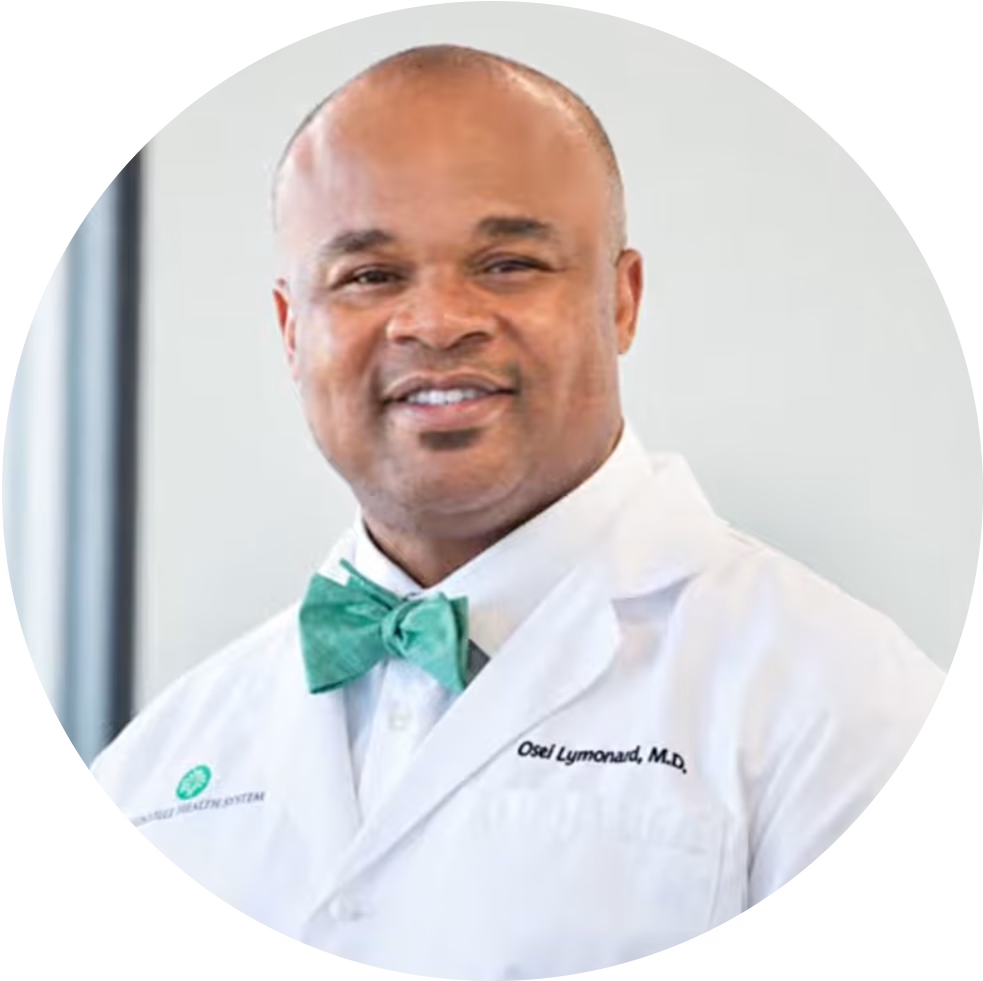
Dr. Obi Ugwonali, M.D., is a board-certified orthopedic surgeon specializing in hand, wrist, shoulder, elbow, and microvascular surgery. He earned his medical degree from Yale School of Medicine, completed orthopedic research and residency training at Columbia University, and pursued fellowship training in hand, shoulder, elbow, and microvascular surgery at Harvard-affiliated institutions.